mathjax

Friday, March 15, 2019

We are all intellectual capitalists


Many problems that arise out of conflict in society between people, organizations, nations, and so on, are a direct result of how our biological brain's design.

We are all intellectual capitalists.

What is capitalist? 

A capitalism is a system of interaction between individuals about objects. Normally, it is the system of trading physical objects or abstract services between those that participate.

It is not accidental why we evolved to this kind of society system.

Our brains' operation is capitalistic. Our brain considers ideas of value, or not, and takes in the valuable and throws out the non-valuable.  It doesn't matter what the topic is, how it is met in the open in society, and makes personal decisions based on beliefs and reason one each.

We seek things that answer our Maslow's hierarchy of needs. We repel things that, we believe, take us away from those same needs.

In the process, we determine that ideas, like people and other objects, are part of how we get there on this journey. At the same time, we also reject ideas, like people and other objects that will not help us get there.

We treat ideas like real objects because to an evolved brain there is little distinction between the imaginary and the real. It's not a bug, it's a feature.

Saturday, March 9, 2019

Hegel's Know thyself

Know thyself—whether we look at it in itself or under the historical circumstances of its first utterance—is not to promote mere self-knowledge in respect of the particular capacities, character, propensities, and foibles of the single self."
- Hegel's Philosophy of Mind

Firstly, where is an individual's unity?  Point out it's location directly to me.  If you say it is the soul then indicate exactly where in the body that soul is. I defy you to discover that to any reasonable standard. What is our identity if you can't locate it?

Koestler points out biological beings may be holonic rather than individual. Both on and off, alive and dead, many and one.  Can anyone prove we are not alive and dead at the same time? At any one time cells are dying and dead as others are created and living. This is known scientific fact. Can anyone say the living cells are outside our humanity while the dead ones aren't? Live cells are equally inside our body and outside: when we defecate there are live cells within that matter that are outside of ourselves. There are dead cells within us as we exist. The self, in the real, is by itself a problematic condition.

Secondly, what is inside our knowledge if we can't prove under solipsism if we exist outside our own thoughts?

Self-knowledge is like self-language: both are artificial constructs founded as a way to ground the appearance of other dubious things that we can't prove exist.

If you can't prove self-knowledge rests within a non-definable individual, you can't prove that self-knowledge exists.


Sunday, November 11, 2018

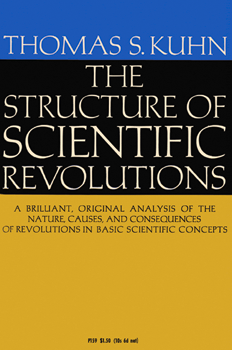
To understand Thomas Kuhn is to understand science


If you don't know who Thomas Kuhn was, then you are missing a vital piece of knowledge when it comes to #science. 


If you are a #scientist +scientist, #science #journalist, #scientific historian, and so on,  and have never read The Structure of Scientific Revolutions, then you don't know much about your own field. You may write articles and submit grant proposals, but that's the external mechanics of how science operates.  Thomas Kuhn wrote about the dirty, messy, underbelly of the inner game of science, how people are tribal and refuse to accept better ideas, how most scientists are normal scientists, and only a few work in abnormal science ( the kind of work that leads to paradigm shifts - his idea) that revolutionizes what we know, and more. 

Sunday, October 28, 2018

The absurdity of religion

All religion is heresy to other religions: the t-shirt!
There is one inherent absurdity of believing in one, and only one, religion.

If there is one true religion, then the rest are false. Ergo, all other not-religions are heresy.

Any religion that is not your religion is not-religion because it is not your one true religion.


Therefore, the odds are your religion is heresy since it is outnumbered by many others.

The set of all not-religions is the set including all not-your religions and your religion.  So Christianity is included in the set not-Buddhism. The negation of your religion is the rest of the Venn diagram.  

But how does any one find out which is true?


'


Wednesday, September 12, 2018

Saturday, June 2, 2018

Integral Action in Buddhism does NOT MEAN Right Action


I have a great disagreement with most Buddhist monks whom do not study the meaning of words with the same fervor they take to chanting and mysticism.  Assuming you understand a word and accepting it from dogma is not enlightenment, it is orthodoxy.

Right Action is the misunderstood component of the Noble Eightfold Path - towards enlightenment - that makes people assume what it means.

Samma-Kammanta's literal meaning is integral action not "right action".

This is the definition in question.


Integral Action: break down this concept:

Integral means "necessary and important as a part of a whole."

Action means "the process of doing something, especially when dealing with a problem or difficulty."

Right action is as confused as most monks are, what is right about any action? That action does "good"?  There is no absolute good, nor evil. 

To find the limit of evil is like swinging wildly into M.C. Echer's snake enigma above and only hitting one snake.

How does one determine the limits of evil when Buddhism is a personal raft built for one? No other Buddhist can judge - and when you attain deep personal awareness they cannot even advise - what is good in any other method than generalities. If killing Hitler would save 6 million people, a Buddhist mustn’t kill? Does this make sense for the good of 6 million other people? Extreme examples are still within the bounds of humanity.

In fact, Zen Buddhist Samurai took the interpretation over to the other extreme in that any interpretation of killing for the greater good ( for their master, for their house, ...) isn't just acceptable, it's obligatory under the code of a samurai.  It is a convenient spin by those Buddhists that find that offensive to claim Samurai were not dedicated Buddhists as if that made their interpretation true.

To me, it would be shameful to reject the enlightenment of any one Buddhist that I don't agree with. That is intolerance.

To Zen Samurai, their interpretation is that acting for the whole, for the integrity of their community, was precisely what belief in Buddhism was for.

Action for the purpose of integrity does not mean without violence in all cases. If it can contain violence in one case, it can be contained in any case.
 

Sunday, April 15, 2018

Why Politicized Science Is Dangerous by Michael Crichton


I lifted a couple of pages from Michael Crichton's book, State of Fear,  and I am putting them in blog form so as to make sure his words enter the search engine databases of the world. We are all a little poorer - intellectually speaking - that Michael Crichton did not live on into a proper old age. He was a gifted orator and a sharp wit. And he did not lose his scepticism despite his wealth and fame.

On the occasion of the march for science, an annual science advocacy ( or so it might appear despite all the anti-Trump bias this time )  gathering that is meant to remind people where the positive changes for society come from, there must also be voices of caution about how some people practice science - just like every other profession - and how unchallenged theories, politicking, and the subornation of useful idiots ( I am refering to you #JohnOliver ) does not make society better off for science knowledge. People swept up in emotionalism, the kind of stuff that politicians do, make for worse discriminants of scientific value than anyone else. They are sold on a cult of personality, or other bad judgement, and that means they aren't paying attention to reality. 

Science is about reality. Not about feelings. Not about politics. Not about personalities. You can't arrive at the right answers if you are goaded into looking in the wrong places.

If you don't believe me, watch some old lectures by Professor Richard Feynmann on Youtube. He was the guy other Ph.D's in Physics turned to solve the equations for nuclear bombs. He was awarded a Nobel Prize for Feynmann diagrams. And he rejected all the pomp and pageantry of others that put on airs of invincibility.

If you are listening to a scientist, and he doesn't sound like a normal person, somehow his behaviour belies a notion that his ideas are better, then what makes you certain his ideas are grounded in reality?

Without further ado.  Michael Crichton's Appendix I ( verbatim):


APPENDIX I

Why Politicized Science Is Dangerous

Imagine that there is a new scientific theory that warns of an impending
crisis, and points to a way out.
This theory quickly draws support from leading scientists, politicians, and
celebrities around the world. Research is funded by distinguished philan-
thropies, and carried out at prestigious universities. The crisis is reported
frequently in the media. The science is taught in college and high school
classrooms.

I don’t mean global warming. I’m talking about another theory, which
rose to prominence a century ago.

Its supporters included Theodore Roosevelt, Woodrow Wilson, and
Winston Churchill. It was approved by Supreme Court justices Oliver
Wendell Holmes and Louis Brandeis, who ruled in its favor. The famous
names who supported it included Alexander Graham Bell, inventor of
the telephone; activist Margaret Sanger; botanist Luther Burbank; Leland
Stanford, founder of Stanford University; the novelist H. G. Wells; the
playwright George Bernard Shaw; and hundreds of others. Nobel Prize
winners gave support. Research was backed by the Carnegie and Rockefeller
Foundations. The Cold Springs Harbor Institute was built to carry out this
research, but important work was also done at Harvard, Yale, Princeton,
Stanford, and Johns Hopkins. Legislation to address the crisis was passed in
states from New York to California.

These efforts had the support of the National Academy of Sciences, the
American Medical Association, and the National Research Council. It was
said that if Jesus were alive, he would have supported this effort.All in all, the research, legislation, and molding of public opinion sur-
rounding the theory went on for almost half a century. Those who opposed the
theory were shouted down and called reactionary, blind to reality, or just plain
ignorant. But in hindsight, what is surprising is that so few people objected.
Today, we know that this famous theory that gained so much support was
actually pseudoscience. The crisis it claimed was nonexistent. And the actions
taken in the name of this theory were morally and criminally wrong. Ulti-
mately, they led to the deaths of millions of people.
The theory was eugenics, and its history is so dreadful—and, to those
who were caught up in it, so embarrassing—that it is now rarely discussed.
But it is a story that should be well known to every citizen, so that its hor-
rors are not repeated.

The theory of eugenics postulated a crisis of the gene pool leading to the
deterioration of the human race. The best human beings were not breed-
ing as rapidly as the inferior ones—the foreigners, immigrants, Jews, degen-
erates, the unfit, and the “feeble minded.” Francis Galton, a respected
British scientist, first speculated about this area, but his ideas were taken far
beyond anything he intended. They were adopted by science-minded Amer-
icans, as well as those who had no interest in science but who were worried
about the immigration of inferior races early in the twentieth century—
“dangerous human pests” who represented “the rising tide of imbeciles” and
who were polluting the best of the human race.
The eugenicists and the immigrationists joined forces to put a stop to
this. The plan was to identify individuals who were feeble-minded—Jews
were agreed to be largely feeble-minded, but so were many foreigners, as
well as blacks—and stop them from breeding by isolation in institutions or
by sterilization.
As Margaret Sanger said, “Fostering the good-for-nothing at the expense
of the good is an extreme cruelty . . . there is no greater curse to posterity
than that of bequeathing them an increasing population of imbeciles.” She
spoke of the burden of caring for “this dead weight of human waste.”
Such views were widely shared. H. G. Wells spoke against “ill-trained
swarms of inferior citizens.” Theodore Roosevelt said that “Society has no
business to permit degenerates to reproduce their kind.” Luther Burbank:
“Stop permitting criminals and weaklings to reproduce.” George Bernard
Shaw said that only eugenics could save mankind.
There was overt racism in this movement, exemplified by texts such as The Rising Tide of Color Against White World Supremacy, by American author
Lothrop Stoddard. But, at the time, racism was considered an unremarkable
aspect of the effort to attain a marvelous goal—the improvement of
humankind in the future. It was this avant-garde notion that attracted the
most liberal and progressive minds of a generation. California was one of
twenty-nine American states to pass laws allowing sterilization, but it proved
the most forward-looking and enthusiastic—more sterilizations were carried
out in California than anywhere else in America.
Eugenics research was funded by the Carnegie Foundation, and later by
the Rockefeller Foundation. The latter was so enthusiastic that even after the
center of the eugenics effort moved to Germany, and involved the gassing
of individuals from mental institutions, the Rockefeller Foundation contin-
ued to finance German researchers at a very high level. (The foundation was
quiet about it, but they were still funding research in 1939, only months
before the onset of World War II.)
Since the 1920s, American eugenicists had been jealous because the Ger-
mans had taken leadership of the movement away from them. The Germans
were admirably progressive. They set up ordinary-looking houses where
“mental defectives” were brought and interviewed one at a time, before
being led into a back room, which was, in fact, a gas chamber. There, they
were gassed with carbon monoxide, and their bodies disposed of in a cre-
matorium located on the property.

Eventually, this program was expanded into a vast network of concen-
tration camps located near railroad lines, enabling the efficient transport and
killing of ten million undesirables.

After World War II, nobody was a eugenicist, and nobody had ever been
a eugenicist. Biographers of the celebrated and the powerful did not dwell on
the attractions of this philosphy to their subjects, and sometimes did not men-
tion it at all. Eugenics ceased to be a subject for college classrooms, although
some argue that its ideas continue to have currency in disguised form.
But in retrospect, three points stand out. First, despite the construction
of Cold Springs Harbor Laboratory, despite the efforts at universities and
the pleadings of lawyers, there was no scientific basis for eugenics. In fact,
nobody at that time knew what a gene really was. The movement was able
to proceed because it employed vague terms never rigorously defined.
“Feeble-mindedness” could mean anything from poverty and illiteracy to
epilepsy. Similarly, there was no clear definition of “degenerate” or “unfit.”
Second, the eugenics movement was really a social program masquer-
ading as a scientific one. What drove it was concern about immigration and
racism and undesirable people moving into one’s neighborhood or country.
Once again, vague terminology helped conceal what was really going on.
Third, and most distressing, the scientific establishment in both the
United States and Germany did not mount any sustained protest. Quite the
contrary. In Germany scientists quickly fell into line with the program. Mod-
ern German researchers have gone back to review Nazi documents from the
1930s. They expected to find directives telling scientists what research
should be done. But none were necessary. In the words of Ute Deichman,
“Scientists, including those who were not members of the [Nazi] party,
helped to get funding for their work through their modified behavior and
direct cooperation with the state.” Deichman speaks of the “active role of
scientists themselves in regard to Nazi race policy . . . where [research] was
aimed at confirming the racial doctrine . . . no external pressure can be doc-
umented.” German scientists adjusted their research interests to the new
policies. And those few who did not adjust disappeared.

A second example of politicized science is quite different in character, but it
exemplifies the hazards of government ideology controlling the work of
science, and of uncritical media promoting false concepts. Trofim Denisovich
Lysenko was a self-promoting peasant who, it was said, “solved the problem
of fertilizing the fields without fertilizers and minerals.” In 1928 he claimed
to have invented a procedure called vernalization, by which seeds were
moistened and chilled to enhance the later growth of crops.

Lysenko’s methods never faced a rigorous test, but his claim that his
treated seeds passed on their characteristics to the next generation repre-
sented a revival of Lamarckian ideas at a time when the rest of the world
was embracing Mendelian genetics. Josef Stalin was drawn to Lamarckian
ideas, which implied a future unbounded by hereditary constraints; he also
wanted improved agricultural production. Lysenko promised both, and
became the darling of a Soviet media that was on the lookout for stories
about clever peasants who had developed revolutionary procedures.
Lysenko was portrayed as a genius, and he milked his celebrity for all
it was worth. He was especially skillful at denouncing his opponents. He
used questionnaires from farmers to prove that vernalization increased crop yields, and thus avoided any direct tests. Carried on a wave of state-
sponsored enthusiasm, his rise was rapid. By 1937, he was a member of the
Supreme Soviet.

By then, Lysenko and his theories dominated Russian biology. The result
was famines that killed millions, and purges that sent hundreds of dissenting
Soviet scientists to the gulags or the firing squads. Lysenko was aggressive
in attacking genetics, which was finally banned as “bourgeois pseudo-
science” in 1948. There was never any basis for Lysenko’s ideas, yet he
controlled Soviet research for thirty years. Lysenkoism ended in the 1960s,
but Russian biology still has not entirely recovered from that era.
Now we are engaged in a great new theory, that once again has drawn the
support of politicians, scientists, and celebrities around the world. Once again,
the theory is promoted by major foundations. Once again, the research is
carried out at prestigious universities. Once again, legislation is passed
and social programs are urged in its name. Once again, critics are few and
harshly dealt with.

Once again, the measures being urged have little basis in fact or science.
Once again, groups with other agendas are hiding behind a movement that
appears high-minded. Once again, claims of moral superiority are used to
justify extreme actions. Once again, the fact that some people are hurt is
shrugged off because an abstract cause is said to be greater than any human
consequences. Once again, vague terms like sustainability and generational
justice—terms that have no agreed definition—are employed in the service
of a new crisis.

I am not arguing that global warming is the same as eugenics. But the
similarities are not superficial. And I do claim that open and frank discussion
of the data, and of the issues, is being suppressed. Leading scientific journals
have taken strong editorial positions on the side of global warming, which,
I argue, they have no business doing. Under the circumstances, any scien-
tist who has doubts understands clearly that they will be wise to mute their
expression.

One proof of this suppression is the fact that so many of the outspoken
critics of global warming are retired professors. These individuals are no
longer seeking grants, and no longer have to face colleagues whose grant
applications and career advancement may be jeopardized by their criticisms.
In science, the old men are usually wrong. But in politics, the old men
are wise, counsel caution, and in the end are often right.

The past history of human belief is a cautionary tale. We have killed thou-
sands of our fellow human beings because we believed they had signed a
contract with the devil, and had become witches. We still kill more than
a thousand people each year for witchcraft. In my view, there is only one
hope for humankind to emerge from what Carl Sagan called “the demon-
haunted world” of our past. That hope is science.

But as Alston Chase put it, “when the search for truth is confused with
political advocacy, the pursuit of knowledge is reduced to the quest for
power.”

That is the danger we now face. And that is why the intermixing of
science and politics is a bad combination, with a bad history. We must
remember the history, and be certain that what we present to the world as
knowledge is disinterested and honest

Wednesday, March 21, 2018

Common sense versus humanity.

Sometimes I struggle to understand how normal people think. What facts they use, and how they arrive at ill-informed conclusions.

So people are upset this person sold metadata from information that users voluntarily uploaded to Facebook, after signing a user agreement they never read, including your drunk vomit photos and your silly comments about nothing?


But when the #NSA started stockpiling personal data from foreigners from the entire world (outside the USA) in this Utah datacenter, without probable cause nor a warrant, that was met with indifference?


Sunday, March 4, 2018

A response to Stuart Glennan's "On our craving for generality"


In Professor Glennan's "On our craving for generality", he makes an argument about an acceptable need for generality in philosophy and he conjures Professor Wittgenstein's lone criticism.

Wittgenstein also stated:

People are deeply imbedded in philosophical, i.e., grammatical confusions. And to free them presupposes pulling them out of the immensely manifold connections they are caught up in.

I like to paraphrase this by claiming what he really meant was the philosophers are masters of self-confusion. Because, within the folds of language, there are many interpretations to hide your theory in that make skepticism impractical and falsification impossible.  This is the malaise of philosophy borne out by the acceptable practices of it's mendicants. 

While Glennan is right that generalization allows one to make more useful rules ( associations, relationships), if you like, similar to natural philosophy, about the epistemological world that apply to a wider context than would otherwise be possible without generalization. I don't see, however, how he can always by correct when philosophy started out 2000 years ahead of science and has delivered so very little in comparison. This is not disputable by any performance metric one intends to measure. By time. By effort. By accomplishments.


Within the last 200 years, we have seen the capabilities of science-driven thought uncover billion-fold improvements in ability. The abacus may still arrive at instantaneous answers, but binary sequential computers can approach a Zeno's distance of that goalpost. One can scoff at technology, but the models inherent in those systems have also advanced and accelerated in complexity and generality as they are improved, generation after generation. Contrast this with modern philosophical by-products.

And yet, philosophers remain unmoved.  This should be frightfully unnerving for philosophers to see so many pass them by.  That, to me, indifference by philosophers speaks to a relative misapprehension regarding  the notions of achievement and advancement. These are all symptoms of a protected workshop, unwilling to change.

Even within science, the electrical disciplines goad the biological disciples to pick up the pace, as Intel's CEO, attending a pharmaceutical conference, implored them to ramp up the effort because more is possible, faster.

Professor Glennan, in the aforementioned article, points out:

"Wittgenstein’s worries about the craving for generality are in some ways reminiscent of Hume’s worries about the principle of induction. Hume argued that inductive inferences are grounded in our unwarranted commitment to a principle of the uniformity of nature. We use past experience to make predictions about future experience, but this can only work if the future is like the past, and we cannot, on pain of circularity, establish by induction that the future is like the past. Nonetheless we persist with our inductions. It is just habit.
The problem with Hume’s way of putting it is that it suggests that in the past nature has always been uniform; we know it has not.

The real question is not whether the future will be like the past, but when it will be."
Let me pierce that assumption (circular logic amounting to false tautologies) - and philosophical cover - by pointing out a simple proposition. While there are no absolutes like beauty and good, to propose these ideas as time-varying breaks neither generality nor specificity. To assign limits to good or bad may make for exclusions outside the frame, it also distinguishes "better" or "worse" as straightforward. Therein is a model. By claiming we can't induce that this bread, as Hume did, is as nourishing as the last bread may seem rational. But it evades the possibility that if we define the depth and breadth of what bread is, we can make a pronouncement within induction that makes sense. This is where science accelerated away from philosophy.

What philosophy lacks is not generality, it lacks specificity.  Ludwig von Wittgenstein arrived at philosophy from engineering, I can assure you as another engineer witnessing the practices of the philosophical knowledge tribe, what he found was lacking.  Not in the lofty goals nor the ability of the practitioners, but the madness masquerading as method.

Badiou pointed out that truth and false must exist outside any one philosophy.

If so, then any philosophy is the right starting point to make the same inroads on epistemology as the others.

What the sciences developed that philosophy did not, was a set of standards.


They are not what you might imagine, like a protocol or even the scientific method.  They are instead bounded constants that explain the interrelations amongst many concepts. While mass in Newtonian models is incommensurable in an Einsteinian model (in the language of Kuhn), it makes a common reference frame that one can use to compare and contrast models and results.


These standards are mainly embodied as universal physical constants. Boltzmann, Hertz, Avogadro, Newtons, Amperes, and so on. Physical properties - that might be any tangible, practical units of measure - that allow any one's circular logic to depart one constant and arrive at another.  Many are arbitrary, they could be changed, and sometimes do. The length of a metre, the bounds of a second. If a model or proposition about these standards can't be transformed to another then it makes it very easy to falsify. That exposes more error and truth than a messy system where ambiguity is used as cover, not a reason to define and refine. This system makes a mesh or a lattice, or a torus of any circular logic. The transcendence isn't in the method but the patterns it creates in understanding.

Now, Glennan might counter with late-Wittgenstein (also from the Blue Book);

The idea that in order to get clear about the meaning of a general term one had to find the common element in all its applications has shackled philosophical investigation; for it has not only led to no result, but also made the philosopher dismiss as irrelevant the concrete cases, which alone could have helped him understand the usage of the general term. 
Late-Wittgenstein was a study in paradox compared against early-Wittgenstein.  At first,  Wittgenstein is fortified with an optimist's effervescence that symbols and systems had no limit to aiding man's comprehension. At the end, he'd drifted so far into the riddles of words - language is only one knowledge modality - that he'd lost his faith in a better tomorrow.

This all came about not despite his talents nor dedication. I suggest his conversion came about due to the philosophical company he kept, the ill-recognition of his vision, and the plodding pedestrian nature of other minds unwilling to extend their reputation to achieve a better model in philosophy.

As Bertrand Russell wrote of Wittgenstein:

...every morning he begins his work with hope, and every evening he ends in despair
Logical positivism was the attempt to bridge back to philosophy using the same successful techniques that have engorged natural philosophy with more knowledge than philosophy has achieved in 4 times the time. More's the pity that it was gradually excised and replaced.  Given the progress made, was that wiser for the discipline?

Yes, Kant dictates that experience is king, and while physical laws remain temporary theories, their lifespan may exceed the solar system if not infinity. A satisfactory state of affairs to give to our grandchildren.

Science has held its' progress because of formalized definitions and refined common reference frames. Despite the same tribalistic, political, sociological, difficulties of internecine rivalry inherent in all academia.

When and if string theories supersede relativistic models based on Lorentz transformations, that superseded Newtonian Platonic calculus, then mankind is better off than if one hadn't extended upon the standards.


Specificity doesn't proclaim that common reference frame logic is infallible, nor that any one set of arguments cannot be demonstrated false when compared to greater knowledge attained elsewhere. Falsifiability is still the goal, but the way to achieve it at every step in science is understood even if the ultimate outcome is not. Older scientists are proven wrong as new theories are proven better. Better may not be quantifiable in absolute terms, but the practical limits are widened nonetheless.

Let me represent the values of common reference points in an analogy.

Suppose that constants are like handholds on the face of a steep mountain. One can advance up the mountain by building a logical argument that clings to one of these constants.  If science was a pre-climbed mountain, Mount Science perhaps, then new climbers would arrive at the base camp with many visible, understood, and solid points to work from. If one climbs through a point but arrives at a dead end, some impossible vertical, then one can traverse back to another constant in the pursuit of a further plateau.  The mountain is nowhere conquered, but there are many beaten paths to ascend in comfort and safety, making attempts at higher points more achievable in a lifetime.

Now, imagine what today's Mount Philosophy looks like.

Saturday, January 27, 2018

#NFL In Due Keeping

I agree with @nflcommish;

@SuperBowl is perfect time to recognize #WWII veteran #MedalofHonor  Hershel Williams.

After 73 years, the @nfl didn't have a better time and wouldn't want the fame, $$$, and celebrity to go to his ego.

#PleaseStand

http://tinyurl.com/y98x5bly

Monday, December 25, 2017

Badiou and the supernumerary name

For Badiou's Being and Event, given this text is old, traditional in the wake of Logics of Worlds, it staggers from inconsistencies like the one I describe here.

His use of the term supernumerary throughout the book brings with it confusion as to the many inferred meanings, the Fregean senses, one can extract. It strikes me often when reading philosophy did the author use a word slyly, being duplicitous in meaning by design, or was he or she unaware of the translation that specific word can result in.

I suspect that philosophers, given the searing attacks anyone can make on any knowledge beneath transcendentals, play a dangerous game of courting many suspicious groups by picking and choosing cognitive synonyms at will.

When a mathematician specifies a word, at least the courtesy is given to the reader to make the meaning singular. Otherwise, and by convention, other mathematicians will attack the double entendre as a weakness applied to the entire argument. And therewith destroy it.

Philosophers are masters of self confusion. Herein is a habit that discredits an otherwise plausible argument. Here was von Wittgenstein's complaint and why they, his peers but not equals, tend to savage his honest work without merit. Wittgenstein doubted from knowledge, they impugned from emotions.

For Badiou's logic; he uses supernumerary for:

Supernumerary axioms
Supernumerary names
Supernumerary elements
Supernumerary being
Supernumerary multiple
Supernumerary symbol
Supernumerary situation
Supernumerary nomination

He uses it 53 times.

In his mind they might be all the same. In his comprehensive understanding he can elucidate the context to each. To the outside world, they cannot be equal. Or they have not been made exclusively the same.

Philosophy will never advance, no matter how dedicated, how intelligent, nor how driven it's mendicants are until and unless they decide to humble their horizons to smaller fundamental expositions that construct unassailable arguments.


Thursday, November 2, 2017

Why autonomous car companies will fail. For now.

Google's Waymo has disabled autopilot features which allow drivers to become a passenger.

https://uk.reuters.com/article/uk-alphabet-autos-self-driving/google-ditched-autopilot-driving-feature-after-test-user-napped-behind-wheel-idUKKBN1D00QM

While this may seem like a minor problem, it is in fact a death knell to profitable autonomous vehicle projects.

I have argued for a while that people who understand how far autonomy and artificial intelligence have come, the people that study it, are far less impressed at how much it can accomplish - safely and reliably. These may be marketing-weaponized jargon to impress investors, but they are two terms that have been promised since the 1970's.

Mobile autonomy is not ready. I attended at talk at the Institute of Electrical and Electronics Engineers (IEEE - the people that make standards like WiFi) by Sebastien Thrun at IEEE CVPR 2012. At that time he said it was "90% solved with 90% to go" in a joking manner to a room full of people who understood what he meant, not an audience full of investors with dewey eyes and dreams of striking it rich. He was admitting that the solution isn't present. That's not what they tell investors, is it? He left Google soon after to work on Udacity.

He went on to describe how one autonomous car at that time almost got in an accident when it was driving along smoothly and it stopped without warning and without prediction for a floating plastic bag. The car behind it screeched to a halt.

As Johnathon Schaeffer (created an AI that beat humans at checkers) warns about AlphaGo that just because you can play a game well doesn't mean you can play ALL games well. There are unusual situations that come up in games.

When I was a Master's student at the University of Alberta, I was awarded 2nd prize by IEEE Northern Canada Section for my adaptive AI Rock Paper Scissors/ Roshambo player that beat all the competitors from the recent RPS championships. I did it with a simple strategy: I made an adaptive strategy that used ALL the other players' strategies against opponents. It chose a strategy from the other players, and over time it weighted choices to the better ones, and would compete in a non-predictable manner. When it started losing it would revert to the games theory Nash equilibrium of 1/3 rock, 1/3 paper, 1/3 scissors and play for a tie. It beat all the others including Iocaine Powder - the reigning champ.

It was a novel approach, but it didn't have any real insight into how it was winning or what key factors underline the strategy. That was my novelty. It wasn't playing a defined strategy. That made it unusual so other computer strategies couldn't store a time-history of moves and predict how to beat it.

So what it did do in effect was present an unusual situation to the other AI agents. And they failed. I didn't beat them, they failed to beat me.

It would be a philosophical stretch of epic proportions to say the mobile autonomy AI are the same as AI games players.

But it is a philosophical stretch of even greater proportions on their part to claim that the AI algorithms that work in defined space games  like checkers or Go are up to the challenge of dynamic problems in 4D time-space.

I claim they are similar, yet the mobile autonomy problem space is much more complicated and time varying than the game player problem space is. That supposition is beyond dispute by anyone.

The problem with mobile autonomy is not that it works, is that it only works in the known part of the problem spaces. It can't guarantee a victory ( to drive up to users' expectations ) in unusual situations, i.e. the blowing plastic bag thought to be an obstacle. If your robot car depends on a map of the roads, what happens in a construction zone? What happens when a road disappears or a house is put in it's place?  What happens when there is an accident in the middle of the highway? Flying tire? Cardboard box? What happens if a policeman is outside the vehicle gesturing that the car pull over?

I research autonomy. I know the algorithms on the inside of the car. I would not get in an autopilot vehicle.

In fact, I was one of the first autonomous robot wranglers when we made this one in 2005:


I work on this one right now:


Waymo is developing autonomous cars that they are admitting are not autonomous. They are blaming it on drivers getting careless - behaviour which their own testers did during beta-testing - but they are admitting they can't make the vehicle work without the driver almost in control. That makes their AI system an expensive paper weight.

In any case, they are trying to make the driver responsible so they can de-risk their own product, not make drivers any more safe. It's like a reverse-liability Jedi mind trick.

But that won't stop them from being sued or losing huge court rulings against them.

Why that matters to Waymo and Uber and all other neophyte mobile autonomy companies: in the US the product law is governed by strict product liability.

https://en.wikipedia.org/wiki/Product_liability#Strict_liability
Under strict liability, the manufacturer is liable if the product is defective, even if the manufacturer was not negligent in making that product defective.

Slick US lawyers will have no problem pinning the blame for accidents on autonomous vehicles if the human being can't be aware of where the AI fails. They can show the products are defective because the autonomous vehicles fail to understand the simplest scenarios for humans. It won't matter what machine learning they use or how much data they crunch. These lawyers will outline the details of the accident to a jury full of drivers. The drivers will consider how easy it is from personal experience how and what to avoid the accident, and they will see these evil billion dollar companies lying to them about how well their products work. The evidence will be the accident itself, not the assurance nor the technology. If a robot cannot figure out a plastic bag, it isn't ready for the road. As a driver you know that plastic bag might be a dog, might be an unannounced construction zone, might be an oversized vehicle, and so on. That means ALL these products are inherently defective. These are huge liability risks given the state of the art right now. This is a huge unfunded risk to autonomous vehicles.

And the question they will posit that will win huge settlements for clients will be a variation on this:

"I ask the jury to consider: as a reasonable driver, given the facts in evidence surrounding this accident, would you have been able to avoid this tragic accident? If so, then you must find the product defective because it wasn't capable of doing what a reasonable driver can do." 

QED

I recommend you steer clear of autonomy vehicle companies. For now.

Friday, September 29, 2017

My predictions on #Trump and #Obama

I predicted #Trump would win, you can go back and look at my old postings.


I also predicted this, and I write this as I listen to #Trump speak to the Manufacturing Association in Washington DC,:

At the end of 4 years, Trump will sound more like Obama, and Obama will sound more like Trump.

As you listen to Trump now versus 2016 it is already happening.

Saturday, July 29, 2017

King Cynic of the Senate.

I cannot tell if #Trump is more like Commodus or Nero, but I can claim that the King of Cynics in the Senate is
Senator John McCain.

Quite willing, fearing his certain and near fate, to implode the welfare of his people to stab at thee, #Trump.


Sunday, July 23, 2017

Death chirps while escaping

This poor fellow stood still too long. I hit him near his hole opening and he emitted a single death chirp as he struggled into the hole. Died mid escape. This proves that often they are critically injured yet able to get into cover.

This demonstrates my theory that Richardson's squirrels are hardy enough to escape despite injuries. You can't tell how many you've hit until you come back next time and observe empty or inactive burrows.

Sunday, June 25, 2017

Ground Squirrel Calls

Richardson's ground squirrels have 4 distinctive chirps. This is their interpretation.

Normal chatter: when talking amongst themselves the tone and cadence sounds like animal talking. Aperiodic communication, uneven tone. They are not alerted to your presence.

Oh shit!: If they let out a half-chirp and the no more sound as they dive into the hole you startled it and it crashed for cover. The local squirrels are aware of you.

Stranger Danger!: If they take cover near hole face and freeze, then they let out a periodic squeak about every 3 seconds. That means they think they are in hidden and are warning other burrows of danger. This is the perfect situation to fix them and shoot. If you can approach from concealment it's a straight shot.

Hey You!: If they are standing or squatting on back legs and emit a squeak - squeak in rapid progression they are calling to other squirrels to find them. They are not alerted to danger but they will detect any noise or movement.


Tuesday, June 13, 2017

Violence in pursuit of purpose

My throat-clearing yesterday, Buddhism and violence, was meant as a precursor to my next exploration:

Violence in pursuit of purpose.


Violence to some is abhorrent. I agree.

Violence to some serves no purpose.  To those I state, you do not understand.

All the universe for all time as we understand it is in a constant state of flux, by flux I mean energy and matter in transition. I won't describe this further but I instruct the reader to consider what any observer would see under Transport Theorem, how electromagnetic forces vary under Maxwell's equations, and of course the grandfather of all differential equations, the Helmholtz equations. If none of these awe you, then simply consider through Higgs waves (gravity) matter from across the universe is incessantly pulling on your every scrap of matter, from every direction, and will continue to pull on your remains once you cease to be whole.

There is no time nor space that is free from appearance or disappearance of matter. In fact, if you consider Lawrence Krauss' book

in fact matter can in deed appear from nothing. We can no more avoid transition than we can avoid death.

Buddhists do not fear death, if they understand, because to not accept death would be to not accept the aforementioned fact that matter and energy continues to flux without end. Even the universe, and everything in it, is posited to cease to exist at some eventual infinite moment we can only guess at. I won't mimic predictions here, because physics is incomplete at least because we can't explain dark matter. Not knowing what 70% of the universe's mass is makes any universal demise prediction as laughable as stating CO2 controls climate warming despite the fact that the trillion ton Sun, the solar energy forcing function, is discounted.

The second factor I would draw to your attention is the quest to know if mankind has free will. The great philosopher Immanuel Kant implored philosophers to work on three transcendental problems; the face of god, transcendental morality, and freewill of mankind in his Critique of Pure Reason. He also explained a lot about how other skeptics were practising more dogma than exposing it.

It's been almost 250 years since most philosophers ignored Kant, and soon with the help of MRI, CAT scans, and other natural philosophy (science) products we might soon explain the basis of that last problem faster than the entire field of philosophy could in 236 years of effort.

As Wittgenstein described, philosophers are expert at self-confusion. I digress.


Buddhists also do not hide nor deny the reality of death; any human that eats food is an accomplice to the death of other living things whether knowingly or not. No one escapes culpability. If you choose not to kill yourself upon learning this truth, then you choose of your own free will to accept your role in the death of other living things. Instead, Buddhists accept that sacrifice is necessary that we collectively may continue and serve a higher purpose. Death is not chosen, purpose is.

One cannot know right now if man has free will for certain. Let us make the case going forward with both possibilities.

To combine the two above factors:

If a man has free will he can choose to act, in some cases decide to act violently - to cause death to another living thing.

If a man does not have free will, he does not choose to act violently, but acts violently nonetheless. It appears in civil society that people do not randomly kill frequently enough, on the scale of billions, that this is not the predominant case.

All living things will die, to choose not to kill is to forestall their death until some future point in space-time.  In general, we choose not to act violently. That seems an odd way to describe it, but the fact that violence does not occur to us to be necessary is exactly the same as consciously deciding to act. I would submit that we subconsciously decide to not act - it doesn't occur to act -  more times than we consciously consider acting. But what accounts for an equivalence of the two ( choosing to not act (conscious) versus not choosing (unconscious) to act)? Logically, are they the same?

When one chooses to act violently, and one has free will, it is based on the reason that ceasing another's life at that moment serves a purpose. One has become aware of circumstances that make action purposeful. It doesn't matter what the circumstances are, it doesn't matter what the excuses are, nor the reasons. Conditions have changed that make violence important or necessary.  Necessary to whom? Necessary for what? Given above, are these even important?

To choose to end life is to purposefully change the condition of matter, now, in this moment, for a purpose. It cannot be otherwise as I have laid out. It could, in the case of non-free will violence, but as stated earlier that there are very few cases humans do that despite a multitude of compelling reasons one might ( greed, chemicals, boredom, apathy, pleasure, emotion, etc.). We decide to not act in almost all possible cases because ACTING SERVES NO COMPELLING PURPOSE.

To act is to become directly involved in the state of flux of the universe, to take possession of the course of events for another living thing. Humans are moral enough and purposeful enough to know how rare those conditions are.  But that also underlines why violence is important when those unique conditions exist.

Even the cognitive dissonance people would feel about intervening, to act to defend, to act to attack, to act to hunt, to act to kill, are all conscious awareness events that an imperative purpose has arisen. This is not just instinct, it is not just reason. It is the unmasking of a purpose for violence.

That doesn't mean violence can't be for evil purposes. That doesn't mean violence can't be self-serving. It means that - from a holistic mindful perspective - it alone exists outside the means and the ends.

I am urged to remind you that inside Buddhism one can find nihilism - anarchy - and chaos if one chooses to interpret all I have said strictly on these facts alone. Even Machiavelli might find these ideas acceptable.

But the teachings of the Buddha more than any other implore all to remember that the state of all beings is suffering and finding ways to become more enlightened is the ultimate goal, not possession and not passion. All those evil nihilistic aims have a purpose which is roughly outside the scope. If you are killing for sport, for territory, for gain, you are not Buddhist in the slightest, you are not enlightened in the least.

On the other hand, killing to prevent murder, killing to reduce global unhappiness or increase global happiness, killing to prevent evil committing atrocities, to defend the defenceless, these can all be interpreted within the eightfold path.

For example, Samma-Kammanta  (integral action) means acting with integrity. "Right action" if you learn it in the West. Acting according to understanding, acting along the beliefs of Buddhism includes respect for all living things. What is more respectful than acting to prevent harm to others?

Samma-Sati (complete awareness ) can make you aware of impending suffering or evil about to be committed against the defenceless. 

In fact, most of these are easier to interpret these paths in Buddhism as complimentary in a capitalist society than Samma-Ajiva ( right livelihood ). Right livelihood expressly forbids exploitation and yet exploiting some advantage is the essence of commerce. To my mind, you are a more noble Buddhist wielding a sword than peddling a cart. But that is not my role to judge others, perhaps those same businessmen also conduct charity.

To act violently with purpose in the eightfold path it must conform to the following:

1. It must not be personal, it must not involve anger or other emotions arising from a familiarity of the target. That would be a crime of passion. The reason you are acting is because you are nearest to the danger or able to respond.

2. It must not be profitable, the loss of one is a loss to society and must always be the least worst option outweighed by the sanctity or survival of other life. If you need to shoot at something to prove your mettle or show your worth, hunt humans THAT SHOOT BACK. They are far more dangerous than any predator.  Pick up a rifle and join a civil war. Fight for something and risk dying for purpose. We will all join you shortly.

3. It must not be glorified. There is no trophy, no recognition because that is fulfilment of lusting and passions are never for the greater good. I don't shoot trophy animals. I don't revel nor parade what I do for anyone on earth.

4. It must not be without purpose. There must be an obvious, immediate purpose that waiting, stalling, negotiating, bribing, or any other mollifying action cannot solve.

5. It must not be indiscriminate. To act without focus is itself committing evil.

6. It must be impending. To act now means there is no other choice.

7. It must be completed swiftly. One mustn’t increase suffering of the target by not completing the act.  I shoot vermin that risk my friend's horses.  If those vermin are hurt and I can reach them I smash their heads in without the slightest hesitation. Last week I hit one through the neck and he was wounded writhing on the ground. Often they run into the hole to die, but this was a case for a coup de grace. If you can't imagine smashing your target's head in to end suffering, then don't begin violence in the first place. I sleep fine because I am at peace with my purpose but I'm not proud of it either.

Violence is always abhorrent, it is always the lowest of human effort and it tarnishes more than it burnishes. There is nothing great in violence. No one violent is great because of it.

But to not act violently when the cost is great is to invite more suffering and tragedy onto an already suffering mankind.

Violence with an enlightened purpose can coexist with the eightfold path.