mathjax

Showing posts with label investing. Show all posts

Tuesday, August 30, 2016

What are investors in the dynamics of the economy?

I have been thinking about how investors interplay with the economy. While the facile view is that investors are the source or money, which isn't false, and they take profits, which is true, they also provide another role.


Investors, including banks, provide a forcing function "of a kind" to the market conditions of the day. Of course people have called it market forces for many years. In some ways that forcing function can provide two effects with specific behaviour apart from random action that is assumed. I will try to establish what "of a kind" means.

The first is reward and punishment for good / bad management of the company by drastic forcing of stock prices, futures etc. This everyone understands.

The second is as a resistance function for and against the current stock price trend. In general investors buy when stocks are undervalued, and sell when they net a profit. This is another one that is probably covered to death in the literature.

What isn't covered is perhaps the application of artificial intelligence to the problem. With principal component analysis, one could understand "exactly" how individual forcing functions operated. If one had that, then you have a stochastic prediction of future action when those same actors held a stock for example.

Whether by algorithm or by human behaviour, they will share a common signature. For example, one might peg a 10 or 15% profit and then always sell.  That makes it, with enough analysis and data, easier to forecast movement. Not guaranteed, not assured, but trends would improve your chances of making the statistically correct decision when faced with buy, hold, or sell.

Note, I am not a financial planner of any kind, which means I am not obligated to lie to you about investing in any way. My evidence for investment knowledge is a 20 year track record of stock investing and turning a profit, not great but consistently positive.


Tuesday, August 16, 2016

The Eventual Stupidity of Investors


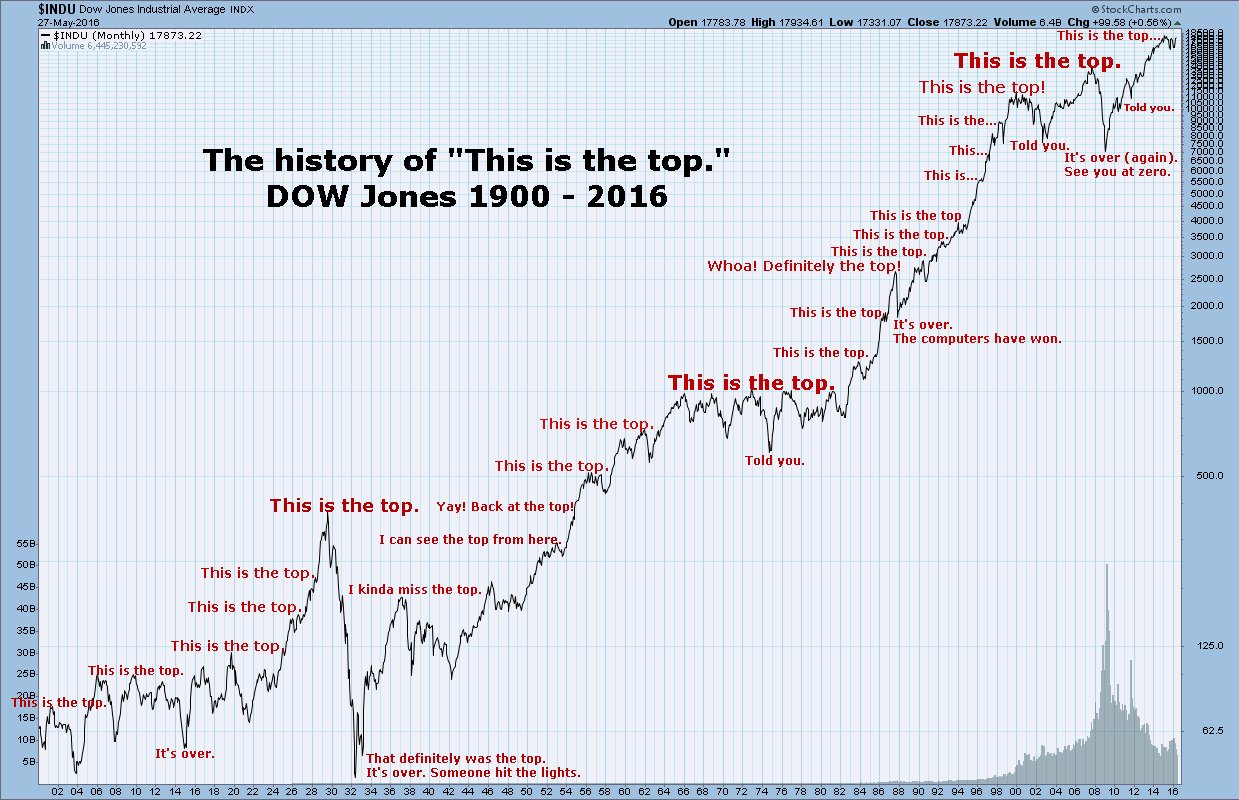
Right now stock markets are climbing to all time highs, at a time when productivity, demand, and worker participation are at all-time lows. Add to that, ageing demographics implies higher societal welfare costs draining discretionary expenditures.  While stocks are individual gambles, they are all operating now in the same investing climate which should dictate profit selling and reducing positions in line with expectations.

Yet stocks are rising and indices are all-time in the US. This is a contradiction. The macro reason is the ultra-liquidity in larger organizations needs to go somewhere and bonds are becoming guaranteed money losing investments.  This is the reality, so people are betting on companies to at least keep their money safe.  Fat chance.

The flight to safety/ quality is a lemming charge off the cliff, the eventual stupidity of investors.  

Right now, lemmings are overconfident in the outcome of the US election, where if Trump or Clinton win there will be dramatic changes to policy and directions the nation takes. The volatility level is surprisingly low for an election year, where zero hedge indicates they must think central banks will save them.

Even if your stocks are in profitable companies, even if they execute at 80% to 100% of forecast, they are still able to return to investors %5 on investment. Why is this a problem? Right now companies are using stock buy-backs to gin up returns and keep their options profitable.

Can anyone tell me what the 5% yield means to a stock that has increased 100%? Yes, that yield - ignoring specifics - for the investor buying at twice the price is 2.5%. You are paying far more and getting far less.

Which constituency has the greatest impact when investors run up the stocks' prices? Yes, insiders with options; exactly the wrong people you want to profit from your money. Their sales will be guaranteed, your money is not.

When Icahn, Marc Faber, and Welch  as proven industrial captains are warning of collapse it's not a question of if but when. This is the summary of economics right now:


And yet, this flight may cause the bubble to burst. All it takes is one massive institutional investor to swamp sell out. If you invest in these stocks you are risking 100% of your money with a slim chance of half returns. Insiders will make a profit and you might not be able to sell in time to get out.  Yes, I concede the volatility might gain you a profit in the short term if you are smart and fast enough. How many are both of these? Most are investing on "hope" and that's why they fail.

My definition of stupidity is fighting old battles: not learning from history how to avoid dangers.   The 2008/2009 bubble was seen and people did not respond in time to avoid. The graphs are aligning to 2008 proportions.

Yet another graph with data one can't spin:


Here's another astute investor pointing out it is interest rate hikes - with so many industries depending on cheap money and massive leverage - that is the single biggest risk to future profits and even business as usual. Hanjin is not the only company that will go bankrupt through over-leveraged operations.

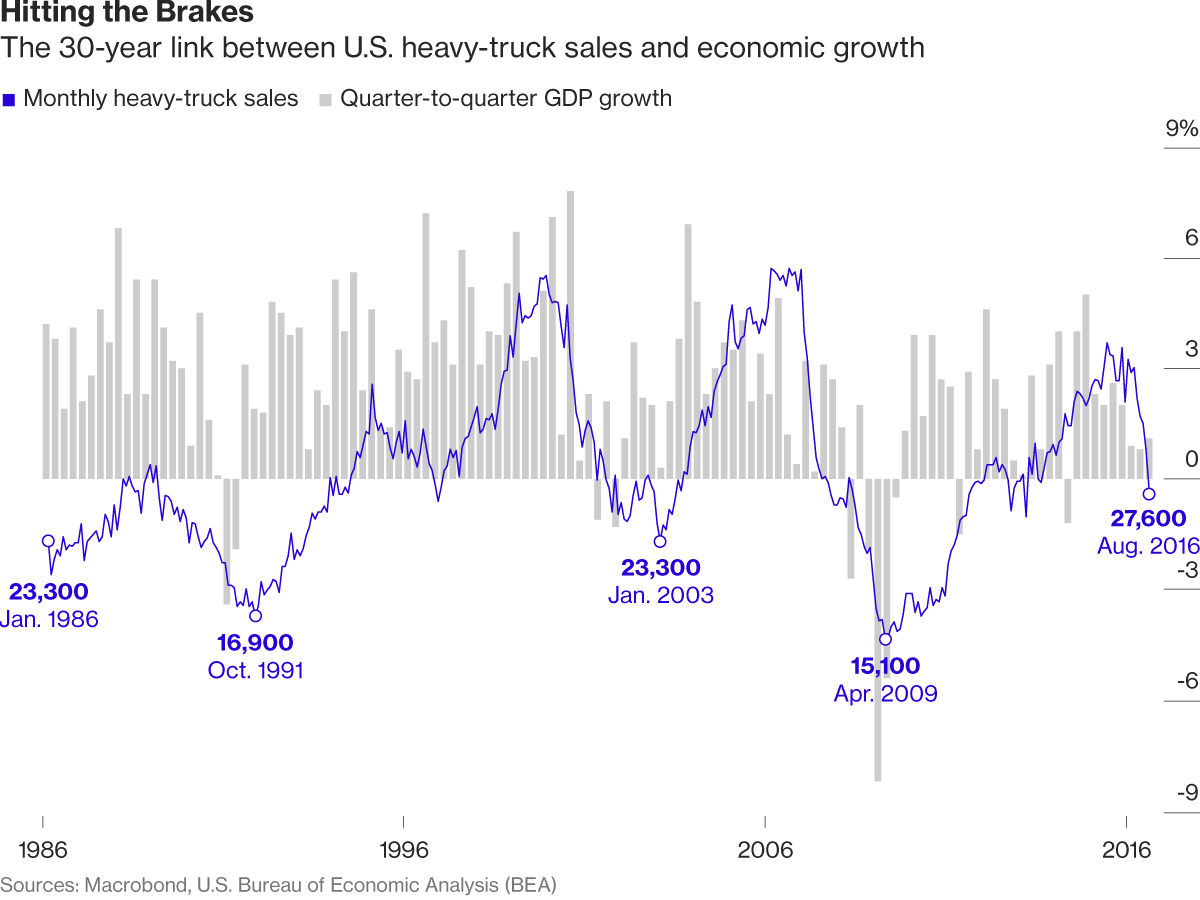
Even truck purchases indicate a recession is underway.


More evidence the market is in overhang mode, last week there were two inside weeks in a row. That is a black swan-type unusual event heralding doom conditions.

Jim Cramer thinks it's turned market sentiment that is punishing under-performing stocks. It's not; cautious people are sniffing around the edges of the next financial collapse. Poor performing stocks are the canary in the coal mine.  Savvy investors are not rushing back into stocks if they suspect bad news might trigger a huge drop.  That's not bad sentiment, it's people paying attention!


Here's a smarter play, pull out your money and wait till these stocks crash. That's a guaranteed way to increase your yield buying in the trough not on the the bow wake. Rebuy at reasonable prices is a smart play.

Riskier for those with balls, short Apple, Google, and Facebook.


Tuesday, January 5, 2016

Anyone can invest in the stock market themselves and profit without advisers.

I know people like to think when it comes to things they don't understand: hire an expert and let them handle it. But if you want to make a profit from investments, hiring an adviser is a cost that you really should think twice about before you start.

The fact is, as Merrill Lynch himself said in one of his books, that a person in some sector of the economy knows more about those conditions than a neophyte reading newspapers and prospecti. And that's exactly what a financial advisor is when it comes to any other sector of the economy.

I have been investing since I was 21. I am an engineer by training. I watched the daily business report on PBS.  But my step dad did a lot of investing and I watched. He also was not a financial person; he was a doctor. So he learned it as well.


Here is a graph from one of my retirement savings accounts. This one has only been open since my divorce about late 2010. In that time, the money I invested has grown by 44%.  Or an annualized return of around 7%.  My investments are the green line.  Frankly, the S&P line is total bunk because the S&P dumps bad stocks and adds others retroactively to the index over time so that doesn't represent the same basket of stocks and in my mind those indexes are fiction made to be propaganda so you think analysts are good at their job.


I've never used an advisor and most of it was made investing in Canadian banks.  I learned about the structure of the banking sector and exploited it.  You see, for my American colleagues, it is against the law in Canada for new banks to be incorporated- so there will never be a banking boom or bust. The six major banks we have are all there will be. And they are equally forbidden to merge and reduce the competition. Canadian banks are run very well and they can exploit steep loans to resource sector companies that have proved profitable over the long run.   All Canadian banks are profitable and we Canadians are too polite to protest the bank fees.  Also, the Canadian government maintains sane regulations on banks so these ones don't experiment unto collapse. Also, they are moving away from public bail-outs so they are forced to maintain reserves.

So if you want to make money investing there is a way you can do it without a middle man. Even the trades are done by computer now so that's more true than it has been.