mathjax

Showing posts with label economics. Show all posts

Thursday, December 17, 2015

You want good economic advice? Listen to Marc Faber

There are few economists that stay inside the right variance on economic assessment and prediction like Marc Faber. Or Dr. Doom:

Marc Faber: This is ‘precisely the wrong time’ for Fed to hike


http://www.cnbc.com/2015/12/15/marc-faber-this-is-precisely-the-wrong-time-for-fed-to-hike.html


Part of the reason the economy does badly is that people listen to the wrong analysis, that leads to the wrong advice, and then they make bad investments, or make bad decisions like when to raise interest rates.  Some people like Marc Faber and even apocalyptic doomsayer Max Keiser are really the only sane people in the room.

Wednesday, November 26, 2014

Economic Action Plan? Government nets $205,000 for a $50-million asset


Merck announced it will pay $50 million for commercial rights to manufacture and develop the vaccine, invented at the Canadian federal government’s National Microbiological Laboratory in Winnipeg.

How is this a commercial success for Canadians?  A US company that is essentially acting as a broker has scored a 244 times asset gain by flipping a Canadian invention to drug giant Merck for $ 50 million. Taxpayers got $205,000.

Surely, had the government lab that made the discovery been allowed to run and licence that patent, rather than PWGSC, I am sure they could have funded themselves for many years and still it would have been a bargain.

Why do we pay managers and executives to manage these things in the first place? That amount might not cover a single executive for a year. I hope they recoup some of it by divesting one executive.

Sunday, November 23, 2014

Working the Economic Levers

People think capitalism doesn't work because of how twisted some industries have become.  The levers of capitalism work today as they did one hundred years ago.  Except the markets have been able to rig the conditions so they don't work properly.


For some unknown reason environmental protesters thought it would be a good idea to bury their heads in the sand.


I can't see how anyone thinks this would work.

When the economic levers are set up properly, then it works the way it should. When you allow polluters to self-regulate and bail out banks that should fail that's the reason why it doesn't.


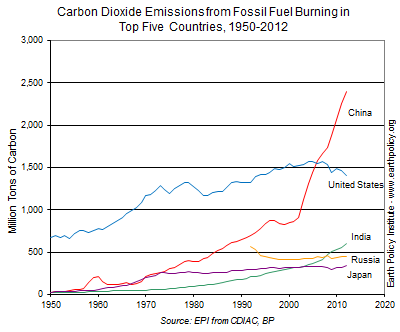
Look at this graph showing emissions:

During the economic crisis, around 2008, US emissions took a plunge to mid-1990's levels.  There was no change in regulations.  There was no political intervention, in fact quite the opposite people were worried about jobs not the environment. The environment fell off the top of mind status. It wasn't as important to everyone.  All that previous time the environmental movement was pushing for change, it took the banks almost going out of business to slow emissions growth and even reverse the trend. Demand dropped and emissions dropped the way it's supposed to work.

That means capitalism does work if you allow it to work.  If you want to change work habits, punish polluters with fines and punish worse polluters more.  That forces businesses to change how they operate.  If you are a person that wants change, don't buy products from the worst polluters.  That is more helpful than burying your own head in the sand.

Saturday, November 22, 2014

A Drug Dealer is a Business Person

It's easy to demonize people that make a living at narcotics.  It seems like they are bad people from the start.

But the reality is that drug dealers are business people.  They supply to a need that other people want. They model their business to the cost benefit analysis.  And they are people like everyone else.

Just look at how far acceptance of LGBT people has changed once the majority stopped listening to the troublesome Church "role models" like disgraced

Ted Haggard.

 
Ted Haggard preached to his flock about sex and drugs, and then smoked crack and had sex with male prostitutes. This man is the ultimate hypocrite.

Of the two, a drug dealer and Ted Haggard, I would feel safer around a drug dealer.  Once people accept that drugs are not going away like alcohol then we can stop demonizing people for business. 


Sunday, November 9, 2014

Obama lost to hubris, not the Republicans


@Bill Maher, you are wrong about how Obama lost.  He lost because he thought the Republicans were too devastated to come back and he decided to play politics instead of lead the country. And the Democrats were just as guilty.

The real reason was identified by @Ed Rogers in the Washington Post back in September.  People don't like being told the economy is getting better when they see people working three part time jobs with no benefits and calling that fully employed. When they see companies laying off workers, when they see no factories coming back you can't lie to them they will get angry at you. Obama continued to overstate the recovery in the face of evidence to the contrary. Even after the election.

Case in point, the Keystone XL pipeline was a guarantee of jobs for Americans but Obama decided to punt the decision down the road and stall high-paying jobs to appease Democratic environmentalists.  But the people wanted the jobs and that angered lots of people in the heartland.

Obama has to expect the Republicans to play politics and play to the base.  So why did he risk a majority by not governing, not working for the greater good? I thought he was a hope and change president?

That's why Obama lost, hubris.


Sunday, November 2, 2014

Diversified Investments without a Cryptocurrency?

Lots of people have investments in all sort of stocks, bonds, GIC's, currencies, and so on.  I won't dwell on the varieties because that's not the issue.  The general wisdom is that to compensate for variability to spread out your money into all sorts of investments. 

The problem is that all these "diversified" investments are still based on the value of a dollar.  In most cases, the US dollar.  Even in resource stocks, the businesses rely on pre-negotiated commodities contracts - providing x amount of resource for y amount of dollars.

But what if the US dollar collapses?

In that case, all those businesses will suffer the same collapse.  They are all interlocked and all based on the same valuation.  So your value in diversified same-model investments is an illusion.

What you need to compensate for that catastrophic (potential) eventuality is to have an investment that is not linked to the same valuations. 

I have started to invest in cryptocurrencies is a hedge against that same-system shared risk.

I own small amounts of Bitcoin and now StartCOIN.  I am just testing the waters but I plan to continue to acquire truly diversified investments.

Thursday, October 30, 2014

Oil-based Economy versus Research-based Economy.

http://www.theglobeandmail.com/globe-debate/this-is-the-path-of-innovation/article21300489/

Most countries possess economies based on the amount of resources in the ground that can be extracted and sold.  I would like to call them oil-based economies although that could also include mining gold and so on. They should be called commodity-based economies but I want to make the distinction that the vast majority of commodity-based economies and the ills they give society are oil-based.

The basic dynamics of these economies are simple: the vast majority of investment, trade, and support business feeds the oil extraction, production, and shipping to resource users.  This is an economy based on how much resource is left in the ground and the current price vis a vis the supply and demand.  There is always doubt and deception used to prop up the value made from the resources; meaning that the supply is unknown and limited and those that make their living from the buying and selling of a resource bias the outcome in their own favour. So what? Well there is a limited amount of resource for the country to tax and exploit so the cheating in the capital system is like a loss to the overall good of the people.   Supplies are presumed to be limited, although there are some that claim fossil fuels might be made in the lower regions of the crust through massive pressures and temperatures.  To say that there is a limit on the amount of gold and silver this is also true. To say that building massive production plants takes years and billions of dollars to do so.


Now contrast this with an economy that bases its economic forecasting, investing, and activity on the value extracted from the creative minds in the economy. The vast majority of investment, trade, and support to the creation of new knowledge, the extraction of that creativity, the production of the products based on that knowledge, and the shipping to product users.  In this case, the supply of knowledge is infinite.  The problem space for mankind, from space travel to nanotechnology, to make products is infinite. The creativity produced is a by-product of a society that is designed to cultivate young minds and the extract and exploit the ideas that curious people offer society.  This economy would not be bound by the ebb and flow of commodity supply and demand.  There would still be losses to society by the middlemen that make their living biasing the supply and demand economy, but since the supply of research resources in question is far greater then the loss to society by ratio is negligible.  As referenced in the article, the flow of an idea from basic research to development to production would also take billions of dollars and tens of years.  So there would be no difference to the overall economy if a country adopted a research-based economy.

At the end of the day, where would you rather your government spend your tax dollars?  Today, most governments won't tell you how much they support the oil-based economy that they could redirect to other industries.

On the whole, any country could change from one to the other, but will the people understand they have the options? Will people see a new way to do business?

Tuesday, October 21, 2014

Stability in the time of economic collapse.

Economic stability in a collapsing market.

The world's economic health is poor and the outlook is uncertain.

This bleak assessment makes me challenge the assumptions on which people are participating.

One, quantitative easing is a lucrative scheme for the bankers and banks that caused the economic uncertainty / collapse in the first place. But it's not being leant out to industry so production can increase, new companies can expand and more workers can go back to work.

Two, given that the same US Dollar and crude oil system is the only market system these same bankers offer there seems to be one choice for investment.

Three, these same bankers are accused of manipulating the value of every investment they offer, including more of the same behaviour that caused the collapse then they haven't learned their lesson. It seems they have learned to cheat the system to remain rich and beyond justice. Their corrupting influence has driven honest investment out of the market. Banks selling toxic loans as credit default swaps to pension funds will backfire twice with average people losing pensions and bankers avoiding risk. This is counterproductive.

Four, it is being said by credible economists outside New York and London that the system is ready to collapse again because it can only go so far with trickery over real economic growth.

In this situation it seems clear to me that competition and the true value are lost in the US dollar and crude oil system. That is the reason they can continue a rigged game is that it's the only one we have to play. They assume we will keep coming back to them and they can continue wrecking average peoples finances.

To me, what people should do is not consider strategies that use the same rigged game but start investing in alternatives. That gives you some stability when the inevitable crash happens and it may provide honest returns better than the current system offers.

If we want the bankers to suffer they should lose their access to your paycheck and eventually they can't finance our destruction. Even real estate is dangerous because it relies on untrustworthy estimates made by bankers trying to get rid of bad assets. If your home is the only asset you own you are not immune from collapse of value. Governments can't step in like they did in 2008 because they rely on income tax and that's still anemic.

So I would argue don't buy gold and oil. Buy bitcoins. Invest in small companies that use alternate currencies as part of their finances. Use digital currencies that are not controlled by those same bankers. Take a portion of your money and move it to a new financial system.

To me, a new and unproven investment like bitcoin is better than a proven old economy sociopath. The risk and reward are honest and connected to real value. Unlike the old system. The more we take away the less they can cheat and the more competitive they are forced to be.

Today I bought my first bit quarter. 0.25 bitcoins. With that I bought 100 Startcoins.  It is scary but at the same time full of possibility.  Which is exactly what the old system used to be 100 years ago.

Do not doom yourself giving money to bankers that return it worthless. Give yourself a life line when the Titanic hits the iceberg. Perhaps become the nouveau riche when those New York bankers are out on the street? Getting in on the ground floor before every one else jumps ship gives you that potential outcome.

Tuesday, October 14, 2014

The Ultimate Oxymoron of Capitalism: Big Banks don't compete for Federal Reserve windfall.

If every other person or company must compete for business, then why do the biggest banks get access to the largest sums of money without competition?

Should it not be that the largest financial institutions must compete to get the loans, to show that they are improving, to demonstrate how they are benefiting the people in order to remain in the position to get the biggest loans?  If not, why would they change?

Even a policy of higher interest rates for the worst offenders would punish the worst run banks. That would punish those at the centre of the worst abuses.

Saturday, October 11, 2014

Maximum Wages - Defeat Sociopathy that ruins Capitalism

Capitalism survived because it works better than every other system.  But what we are seeing now is the less fettered capitalists are, the less they use the system for society's benefit and the more they appeal to their own baser needs.

The whole point of capitalism is it accepts that people are both greedy and lazy - to greater or lesser degrees.  We get people to get out of bed by working for a living and contributing at the blue collar levels.  Basic survival and trying to make a better life for their kids. All workers work for a few dollars more.

Everyone's involvement in capitalism comes down to how lazy and how greedy they are.

Unfortunately, at the highest wealth levels, people are prone to take total advantage of the system they now own by taking full advantage of all the perks.  They play dirty to win a few billion more.


Society owns capitalism, not the wealthy. The social contract is we all agreed to play by the rules in everyone's favour.


When you combine extreme wealth with sociopathy that's not in everyone's best interest. 

How do you combat that?  Make a maximum wage. Or increase taxes over that limit on an exponential scale.

If we cap total income per year at say $10 million dollars then we reduce the incentive to be a sociopathic wealthy person. 

If you can't make any more, then you don't have the incentive to go to extreme measures to make more.  You can be more lazy and less greedy. 

Laws can fix capitalism.  If we invoked a global maximum wage we would solve captialisms ills more than any bailout or legal proceeding.

Monday, September 15, 2014

The Illusion of Sovereignty and Scotland

Max Keiser's Scottish Independence Farce

At the end of Adam Smith's (one of the world's most famous Scots) The Wealth of Nations - which you can download for yourself at the link,  he laments his English king's delusion of control of the American colonies.  He pleads to reason for others to see that you can't control a single people, let alone one across the ocean, without any useful means to do it. As soon as Americans decided to kick out the British soldiers and refuse to pay England the control was lost. 

It must have been a contemporary topic of the time to work it's way into this real economic-meaty book.   But the reality is the same today as it was 300 years ago.  Only the instruments that make a difference should men care about. Sovereignty comes not from ideas but from objects that define the difference.  A flag is a lifeless piece of cloth.  A name is a placeholder for an amalgamation of things. 

Society has realized that money is more powerful than the sword, and for nations banking has become the real currency of civilization.  To be independent yet have no currency is to be subservient to another regime. To allow another country to set your interest rates is to have no control of your destiny.  To make it harder for your citizens to secure loans is to fail them.

So why is Scotland so interested in a flag (symbolic sovereignty) and so unconcerned about financial independence (real sovereignty)?

Wednesday, July 23, 2014

Estate taxes equalize economic starting points


Think of it this way, if you wanted to make sure that rich kids never contribute to society, then allow them to keep all their parents` money.

Without a way to reset wealth, not grab taxes, society would spiral into the very few rich people and the very many poor people.

Money, or wealthier people call it equity, is a tool of society.  It is not a personal tool.  It rewards work, or it used to.  It was never meant as a cudgel to keep people down by the few that can buy everything else. More money equals more help, more lawyers, more lobbyists, more means to keep power without personal risk. It makes it harder to compete when the playing field is not close to fair.  What is fair, no idea, it`s a four letter word for a reason.  Fair isn`t making one side risk everything while the other side risks a margin of their bottom line. 


At the same time, like competitiveness with businesses and industry, there is no way to make inroads to novel ideas, novel products, more efficient and less expensive ways if your opponent can simply reach into the family war chest and spend your company into the ground. 

Look at all the ideas that we couldn`t get because existing companies neutralized better ideas with anti-competitive practices!  Society gets better when we get more efficient, more productive, easier, and safer.  Less is wasted when society and our technologies improve. One way to avoid stagnant legacies is to stop family legacies from holding society back. 

Monday, July 7, 2014

Corporate Punishment: Mandatory 5 Year Jail Term for Managers that ignore Safety Defect warnings

There are few things more dangerous than a loaded gun.  A copper jacketed round packed with gunpowder and fired from a weapon can make a large hole in anything.  The damage to a human being is irreversible, healable maybe.

But, when you look at society as a whole,  the damage caused by careless, apathetic, or neutralized workers (whose job it is to protect the public from  products) overwhelms all loss from warfare.

To put things in perspective, the US lost 4,282 killed in all of the Iraq War 2 including during the insurgency for the period March 2003 until December 2009.  That's 6 years.

In 2012, 33,561 Americans died in auto accidents. In one year.

So who does more damage to society, a lone soldier with a rifle or a manager at a car company that ignores defect warnings from subordinates?

When I read that, in the case of GM, according to GM's culture of ignoring safety problems

GM manager Bill McAleer told host Michael Smerconish that employees who work at GM were "faced with a culture where you get fired if you do talk about quality and safety issues, and you get fired if you don't talk about them."

It is obvious that the risks and rewards for good and bad behaviour are not being learned at car companies.  Imagine you are an engineer. You know there is a problem.  If you complain or cause an issue then the manager looks bad.  If the manager looks bad, they take it out on you.  If you don't speak up, people die.  If you speak up, people will probably still die, but you'll be out of a job and have no way to help the process. See the dilemma from a worker's perspective?  If you keep your job maybe there is a way to get it done. If you make waves, there is no way.

Let me give you a personal engineering example.  When I first got to DRDC from my old job at General Dynamics, I grew bored with the slow motion and the inability to make a difference. I was offered a job at Wittke (then owned by Federal Signal) as a senior electrical engineer so I took a leave of absence and tried my luck back outside in the corporate world.

Now, I was learning the job, learning the designs, and learning the customers.  There was a lot of listening.  And reading. One client (Waste Management Inc.) had an unscrupulous business manager that would take ideas from one company and ask others to make him the same product. Or he would work on his ideal garbage truck design. He was not an engineer, but thought he knew better.  He wanted his trucks to have strobe light flashers so that it would make them very prominent so it would - to his mind increase safety.  This seemed a logical theory.

I had just come from robotics and land mine detection, I knew that I didn't know what I was supposed to know. That is the humility expected of an engineer - not a manager. I was new to the law regarding lighting on trucks.  So I read the laws in the US and Canada.  The Canadian one was mainly a copy of the US one.  All good there.  It did not preclude it at that time.  Ok, good so far.

I talked to our lights suppliers and it seemed we could get them in.  The design was simple enough. Still good.

I didn't know much about strobes, but I knew that perhaps there was a link to epileptic episodes.  My high school friend had suffered from seizures so I was aware how instantly a person could become incapacitated.  I did a little research online and read some resources and found that the frequency range for epileptic seizures is the SAME as for these designed strobe lights.  The strobe could be slowed down, but then it wouldn't be a strobe, would it?

I brought this to the attention of my boss, who at that time was an American engineer. I relayed my concerns about strobes and garbage trucks, that while it might work most times if someone with epileptic seizures - perhaps didn't even know that they had epilepsy - was to view that strobing light from near enough it might cause a violent incapacitating seizure, that person may fall down in front of or worse behind a rolling truck and be killed.  This makes using a strobe a defect of design, it is not inherently safe. I made sure to put my concerns in writing, in an email, to WMI.

Bottom line, I refused to design it.  My boss backed me up. And then the LED light company got back to me with their concerns - after doing a little research of their own and voiced their issue with this design choice. There are lots of checks and balances in the tech world looking out for society.

The manager at WMI was furious, apparently, as I wasn't party to that conversation.  How dare an engineer question him.

Well, thoughtless self-absorbed mangers, that is why you hire engineers and not trained monkeys to keep your designs safe.

And how dare I put it in writing. Now he was trapped. Now what happens when he tries this with another company - that is what he was thinking, not that the issue was serious.

Do you see how managers avoid personal responsibility if they can make it a case of he said, she said?  That is why engineers should always put something important in writing.

Do you see why well meaning engineers can be forced to do the work or lose their job? WMI bought a lot of trucks from my company, this could be a factory closing decision.  Who wants to deal with that? Remember, the engineers do not have ultimate authority we work for the managers that do. We don't get to make the decision.


It turns out that this manager tried other companies to design it for him and they also had problems.  The project was eventually scrapped I'm told because of other issues this guy made with expensive design choices that were largely his making. In the end, a lawsuit would have cost more than the cost of ten trucks.

The issue of safety is really what an engineer "adds value" to a company - by saving a lawsuit that costs more than the incremental improvement of a risky design choice.

 I left the company for other reasons, like they were running it into the ground.

I had the balls to stand up to a customer because I was trained in the Army so I'm not shy and I'm not going to kill anyone through apathy or willful blindness. That is what society expects.  But it is not fun and not to be done lightly. And let's be honest, I also had an out I could go back to my other job.  I could afford to make a stand.

Most people don't have that luxury.  And that is why we need to help them to make us safe. If the law is on our side, there is no where a manager can hide, no where they can blame subordinates.

If a manager were to aim a loaded gun and kill an employee, he or she would be prosecuted under criminal law for the harm caused.  But if a manager hides a defect that same manager could kill tens if not hundreds or thousands of people with no personal liability.  That should change, and soon.

So, based on my own experience, I recommend we encourage lawmakers to write laws that impose mandatory 5 year jail terms on managers that do not heed safety warnings from engineers or other technical people. No legal outs, if you are a manager you should have public safety as a top priority.  If managers do not have the public's safety at heart then we must adjust their cost-benefit analysis to the point where it is in THEIR best interest to be as safe as possible.

Friday, May 30, 2014

Profiteering is based on cheating

Business profit is based on cheating.

By cheating I mean exploiting an advantage that allows one party to take advantage of another.

It could be getting something for nothing.

It could be not paying the whole true cost of the thing in question.

It could be using information that others do not possess.

It could be opportunistically using the current situation against a protagonist. Think China/Russian natural gas contract while Putin fiddles with Ukraine and the West.  Now, now after many years, a deal is made in the midst of a crisis.

It could be exploiting resources that others do not have and need desperately.

It could be nepotism, bribery, extortion...

It could be imperialism, or diplomacy at the end of a gun.

It could be a monopoly, duopoly, or exclusive rights.

Competition is expected to be fair. Fair is the least realistic aspect of life. 

Someone that gets ahead pushes everyone else backwards in that competitive arena.

Going into business, this must be understood.

Friday, April 11, 2014

A Billion Research Dollars

You get more value to society spending $100 million a year for ten years instead of spending $1 billion for one year.

Research is nonlinear, discoveries are not predictable in a classical engineering sense, as they draw on lots of factors to be uncovered. Time and understanding are needed. More discoveries, more patents, more journals will be made from having time to explore all possibilities.

Sunday, March 23, 2014

The real trickle-down economics : science to products

It is no secret that every nation has benefited from incorporation into the economy. The flow of goods and ideas is beyond the imaginings of Adam Smith, as he wrote of in The Wealth Of Nations, about purchasing abroad what is too expensive at home.  It was his proposal that a nation is richer when it chooses not to make uneconomic goods at home and buys them from somewhere else.

His vision and ideas have shaped all the economies, trended them towards integration, and made their citizens more prosperous than they could otherwise be in the old world economic view.  If you need proof, look at the standard of living of the nation that is the least integrated into the rest of society: North Korea. The people there live in the worst conditions and share the bleakest outlook of all.

The problem now is that globalization, the Internet, and international corporations have changed the problem to the other extreme: instead of being hard to set up a business it is getting harder and harder to keep a business going when you can find another cheaper work force and move the factory, the machines and the senior people to a new location, new tax zone, or new hemisphere. How can established nations retain work and therefore workers and taxes when it is so easy to lose them?

Here is a new law that describes this new reality.  The Law of Production Mobility: any skill, technique, or trade that derived from science and engineering that goes into goods production can be passed on when sufficient time, information, and education is available.  The longer the public is aware of it, the less unique it is and therefore the less valuable it is over time.  The more times it is refined or improved, the more likely it is to transfer to less developed nations.

This means any skill has a expiry date on it.  If it can be simplified, trained, divided, and made into YouTube videos then the workforce that depends on that skill set will eventually be too expensive to compete in the labour force of the future.  No work force can expect an infinite duration of the task providing for the family.  By design, all high tech becomes low tech.

What does this mean for nations?  It means that any strategy where they expect a skill to remain is a losing one. Any nation that relies on companies to generate all the economy is equally unwise. Companies are animals of profit, they cannot innovate without risk and loss and they have a vested interest in selling what they have. Also, they tend to find cheaper work forces and offload the more cost expensive parts of the products to the less developed nations. It is as natural way to offset rising labour costs. You can't expect them to operate differently if they are national or international.

What is true is that science, namely research or basic science leads to engineering, that leads to new products and new services. Research is the discovery of new ideas, new methods, new things. Those that research new areas are the first to know the discovery. The engineers and technicians that work with them build upon, expand and develop these ideas further into new ways that are better,faster, cheaper than the existing technologies in the world.

The fact is that the work surrounding a new discovery is hard to move from the place where it took place.  Yes, journals and papers are written and people can reproduce the work. But the reality is that development of an idea or process take times and effort, lots of mistakes and prototypes. That succeeds when the effort is centralized in one long chain from the lab to the factory floor. The new technology is valuable on the world stage and the value is.

Any nation that wants to keep the longest chain of workflow from a research to technology develop net thence into products for the world must concentrate on research at the beginning of the chain. Concentrate the resources t providing society the largest suite of technology from research. This trickles down the maximum value back into society for money invested.

This is the true trickle down economics.