mathjax

Showing posts with label Politics. Show all posts

Sunday, April 15, 2018

Why Politicized Science Is Dangerous by Michael Crichton


I lifted a couple of pages from Michael Crichton's book, State of Fear,  and I am putting them in blog form so as to make sure his words enter the search engine databases of the world. We are all a little poorer - intellectually speaking - that Michael Crichton did not live on into a proper old age. He was a gifted orator and a sharp wit. And he did not lose his scepticism despite his wealth and fame.

On the occasion of the march for science, an annual science advocacy ( or so it might appear despite all the anti-Trump bias this time )  gathering that is meant to remind people where the positive changes for society come from, there must also be voices of caution about how some people practice science - just like every other profession - and how unchallenged theories, politicking, and the subornation of useful idiots ( I am refering to you #JohnOliver ) does not make society better off for science knowledge. People swept up in emotionalism, the kind of stuff that politicians do, make for worse discriminants of scientific value than anyone else. They are sold on a cult of personality, or other bad judgement, and that means they aren't paying attention to reality. 

Science is about reality. Not about feelings. Not about politics. Not about personalities. You can't arrive at the right answers if you are goaded into looking in the wrong places.

If you don't believe me, watch some old lectures by Professor Richard Feynmann on Youtube. He was the guy other Ph.D's in Physics turned to solve the equations for nuclear bombs. He was awarded a Nobel Prize for Feynmann diagrams. And he rejected all the pomp and pageantry of others that put on airs of invincibility.

If you are listening to a scientist, and he doesn't sound like a normal person, somehow his behaviour belies a notion that his ideas are better, then what makes you certain his ideas are grounded in reality?

Without further ado.  Michael Crichton's Appendix I ( verbatim):


APPENDIX I

Why Politicized Science Is Dangerous

Imagine that there is a new scientific theory that warns of an impending
crisis, and points to a way out.
This theory quickly draws support from leading scientists, politicians, and
celebrities around the world. Research is funded by distinguished philan-
thropies, and carried out at prestigious universities. The crisis is reported
frequently in the media. The science is taught in college and high school
classrooms.

I don’t mean global warming. I’m talking about another theory, which
rose to prominence a century ago.

Its supporters included Theodore Roosevelt, Woodrow Wilson, and
Winston Churchill. It was approved by Supreme Court justices Oliver
Wendell Holmes and Louis Brandeis, who ruled in its favor. The famous
names who supported it included Alexander Graham Bell, inventor of
the telephone; activist Margaret Sanger; botanist Luther Burbank; Leland
Stanford, founder of Stanford University; the novelist H. G. Wells; the
playwright George Bernard Shaw; and hundreds of others. Nobel Prize
winners gave support. Research was backed by the Carnegie and Rockefeller
Foundations. The Cold Springs Harbor Institute was built to carry out this
research, but important work was also done at Harvard, Yale, Princeton,
Stanford, and Johns Hopkins. Legislation to address the crisis was passed in
states from New York to California.

These efforts had the support of the National Academy of Sciences, the
American Medical Association, and the National Research Council. It was
said that if Jesus were alive, he would have supported this effort.All in all, the research, legislation, and molding of public opinion sur-
rounding the theory went on for almost half a century. Those who opposed the
theory were shouted down and called reactionary, blind to reality, or just plain
ignorant. But in hindsight, what is surprising is that so few people objected.
Today, we know that this famous theory that gained so much support was
actually pseudoscience. The crisis it claimed was nonexistent. And the actions
taken in the name of this theory were morally and criminally wrong. Ulti-
mately, they led to the deaths of millions of people.
The theory was eugenics, and its history is so dreadful—and, to those
who were caught up in it, so embarrassing—that it is now rarely discussed.
But it is a story that should be well known to every citizen, so that its hor-
rors are not repeated.

The theory of eugenics postulated a crisis of the gene pool leading to the
deterioration of the human race. The best human beings were not breed-
ing as rapidly as the inferior ones—the foreigners, immigrants, Jews, degen-
erates, the unfit, and the “feeble minded.” Francis Galton, a respected
British scientist, first speculated about this area, but his ideas were taken far
beyond anything he intended. They were adopted by science-minded Amer-
icans, as well as those who had no interest in science but who were worried
about the immigration of inferior races early in the twentieth century—
“dangerous human pests” who represented “the rising tide of imbeciles” and
who were polluting the best of the human race.
The eugenicists and the immigrationists joined forces to put a stop to
this. The plan was to identify individuals who were feeble-minded—Jews
were agreed to be largely feeble-minded, but so were many foreigners, as
well as blacks—and stop them from breeding by isolation in institutions or
by sterilization.
As Margaret Sanger said, “Fostering the good-for-nothing at the expense
of the good is an extreme cruelty . . . there is no greater curse to posterity
than that of bequeathing them an increasing population of imbeciles.” She
spoke of the burden of caring for “this dead weight of human waste.”
Such views were widely shared. H. G. Wells spoke against “ill-trained
swarms of inferior citizens.” Theodore Roosevelt said that “Society has no
business to permit degenerates to reproduce their kind.” Luther Burbank:
“Stop permitting criminals and weaklings to reproduce.” George Bernard
Shaw said that only eugenics could save mankind.
There was overt racism in this movement, exemplified by texts such as The Rising Tide of Color Against White World Supremacy, by American author
Lothrop Stoddard. But, at the time, racism was considered an unremarkable
aspect of the effort to attain a marvelous goal—the improvement of
humankind in the future. It was this avant-garde notion that attracted the
most liberal and progressive minds of a generation. California was one of
twenty-nine American states to pass laws allowing sterilization, but it proved
the most forward-looking and enthusiastic—more sterilizations were carried
out in California than anywhere else in America.
Eugenics research was funded by the Carnegie Foundation, and later by
the Rockefeller Foundation. The latter was so enthusiastic that even after the
center of the eugenics effort moved to Germany, and involved the gassing
of individuals from mental institutions, the Rockefeller Foundation contin-
ued to finance German researchers at a very high level. (The foundation was
quiet about it, but they were still funding research in 1939, only months
before the onset of World War II.)
Since the 1920s, American eugenicists had been jealous because the Ger-
mans had taken leadership of the movement away from them. The Germans
were admirably progressive. They set up ordinary-looking houses where
“mental defectives” were brought and interviewed one at a time, before
being led into a back room, which was, in fact, a gas chamber. There, they
were gassed with carbon monoxide, and their bodies disposed of in a cre-
matorium located on the property.

Eventually, this program was expanded into a vast network of concen-
tration camps located near railroad lines, enabling the efficient transport and
killing of ten million undesirables.

After World War II, nobody was a eugenicist, and nobody had ever been
a eugenicist. Biographers of the celebrated and the powerful did not dwell on
the attractions of this philosphy to their subjects, and sometimes did not men-
tion it at all. Eugenics ceased to be a subject for college classrooms, although
some argue that its ideas continue to have currency in disguised form.
But in retrospect, three points stand out. First, despite the construction
of Cold Springs Harbor Laboratory, despite the efforts at universities and
the pleadings of lawyers, there was no scientific basis for eugenics. In fact,
nobody at that time knew what a gene really was. The movement was able
to proceed because it employed vague terms never rigorously defined.
“Feeble-mindedness” could mean anything from poverty and illiteracy to
epilepsy. Similarly, there was no clear definition of “degenerate” or “unfit.”
Second, the eugenics movement was really a social program masquer-
ading as a scientific one. What drove it was concern about immigration and
racism and undesirable people moving into one’s neighborhood or country.
Once again, vague terminology helped conceal what was really going on.
Third, and most distressing, the scientific establishment in both the
United States and Germany did not mount any sustained protest. Quite the
contrary. In Germany scientists quickly fell into line with the program. Mod-
ern German researchers have gone back to review Nazi documents from the
1930s. They expected to find directives telling scientists what research
should be done. But none were necessary. In the words of Ute Deichman,
“Scientists, including those who were not members of the [Nazi] party,
helped to get funding for their work through their modified behavior and
direct cooperation with the state.” Deichman speaks of the “active role of
scientists themselves in regard to Nazi race policy . . . where [research] was
aimed at confirming the racial doctrine . . . no external pressure can be doc-
umented.” German scientists adjusted their research interests to the new
policies. And those few who did not adjust disappeared.

A second example of politicized science is quite different in character, but it
exemplifies the hazards of government ideology controlling the work of
science, and of uncritical media promoting false concepts. Trofim Denisovich
Lysenko was a self-promoting peasant who, it was said, “solved the problem
of fertilizing the fields without fertilizers and minerals.” In 1928 he claimed
to have invented a procedure called vernalization, by which seeds were
moistened and chilled to enhance the later growth of crops.

Lysenko’s methods never faced a rigorous test, but his claim that his
treated seeds passed on their characteristics to the next generation repre-
sented a revival of Lamarckian ideas at a time when the rest of the world
was embracing Mendelian genetics. Josef Stalin was drawn to Lamarckian
ideas, which implied a future unbounded by hereditary constraints; he also
wanted improved agricultural production. Lysenko promised both, and
became the darling of a Soviet media that was on the lookout for stories
about clever peasants who had developed revolutionary procedures.
Lysenko was portrayed as a genius, and he milked his celebrity for all
it was worth. He was especially skillful at denouncing his opponents. He
used questionnaires from farmers to prove that vernalization increased crop yields, and thus avoided any direct tests. Carried on a wave of state-
sponsored enthusiasm, his rise was rapid. By 1937, he was a member of the
Supreme Soviet.

By then, Lysenko and his theories dominated Russian biology. The result
was famines that killed millions, and purges that sent hundreds of dissenting
Soviet scientists to the gulags or the firing squads. Lysenko was aggressive
in attacking genetics, which was finally banned as “bourgeois pseudo-
science” in 1948. There was never any basis for Lysenko’s ideas, yet he
controlled Soviet research for thirty years. Lysenkoism ended in the 1960s,
but Russian biology still has not entirely recovered from that era.
Now we are engaged in a great new theory, that once again has drawn the
support of politicians, scientists, and celebrities around the world. Once again,
the theory is promoted by major foundations. Once again, the research is
carried out at prestigious universities. Once again, legislation is passed
and social programs are urged in its name. Once again, critics are few and
harshly dealt with.

Once again, the measures being urged have little basis in fact or science.
Once again, groups with other agendas are hiding behind a movement that
appears high-minded. Once again, claims of moral superiority are used to
justify extreme actions. Once again, the fact that some people are hurt is
shrugged off because an abstract cause is said to be greater than any human
consequences. Once again, vague terms like sustainability and generational
justice—terms that have no agreed definition—are employed in the service
of a new crisis.

I am not arguing that global warming is the same as eugenics. But the
similarities are not superficial. And I do claim that open and frank discussion
of the data, and of the issues, is being suppressed. Leading scientific journals
have taken strong editorial positions on the side of global warming, which,
I argue, they have no business doing. Under the circumstances, any scien-
tist who has doubts understands clearly that they will be wise to mute their
expression.

One proof of this suppression is the fact that so many of the outspoken
critics of global warming are retired professors. These individuals are no
longer seeking grants, and no longer have to face colleagues whose grant
applications and career advancement may be jeopardized by their criticisms.
In science, the old men are usually wrong. But in politics, the old men
are wise, counsel caution, and in the end are often right.

The past history of human belief is a cautionary tale. We have killed thou-
sands of our fellow human beings because we believed they had signed a
contract with the devil, and had become witches. We still kill more than
a thousand people each year for witchcraft. In my view, there is only one
hope for humankind to emerge from what Carl Sagan called “the demon-
haunted world” of our past. That hope is science.

But as Alston Chase put it, “when the search for truth is confused with
political advocacy, the pursuit of knowledge is reduced to the quest for
power.”

That is the danger we now face. And that is why the intermixing of
science and politics is a bad combination, with a bad history. We must
remember the history, and be certain that what we present to the world as
knowledge is disinterested and honest

Friday, September 29, 2017

My predictions on #Trump and #Obama

I predicted #Trump would win, you can go back and look at my old postings.


I also predicted this, and I write this as I listen to #Trump speak to the Manufacturing Association in Washington DC,:

At the end of 4 years, Trump will sound more like Obama, and Obama will sound more like Trump.

As you listen to Trump now versus 2016 it is already happening.

Sunday, January 22, 2017

American Political Choice, in a nutshell

So I have to vote this year, let's see...

well I like the Libertarian policy of free markets, lowest taxes, staying out of my choices & my body, and no wasteful wars....

but the +Libertarians aren't powerful enough to win so...

I guess I have to choose between +Democrats and +Republicans...

so what do I wanted to be associated with? The crazy Jesus freak radical Christians and their high-minded morality inside the Republican party...

or the neo-Communist anarchists hysterical eco-tree hugging, looting & rioting radicals inside the Democrat party...

I guess I will stay home and not waste my time too.


Sunday, December 18, 2016

How #Trump won


How #Trump Won


For those of you still catching up to reality of President-elect @realDonaldTrump, let me (as someone that predicted his victory in August 2015) enlighten you to how it really happened (vice how he did it which is false because he did not know he was going to win until late in the campaign). I will make a two page argument based on objective outside observation. I favored neither Trump nor Clinton and I argued they were both dangerous candidates. I hoped @GovGaryJohnson would make the debate stage and then at least have a chance at winning.

The first question to address is can you win if you lose popular vote? This is the stupidest question; popular vote versus electoral college is pointless until election law is changed. If you win the electoral college you win, no special mention nor extra value to winning the vote total. That is how you win. Remember the Clinton campaign mocking Trump's misunderstanding of how to win, they should have heeded their own advice. They didn't make swing states a priority. The goal of an electoral college is to prevent New York and California from deciding all elections. If you live outside these two areas you want to make sure large population centres, and all the big city priorities, don't swamp other concerns. State electoral voting demands that candidates make every state a part of the strategy rather than allowing them to ignore flyover states.

Consider all the possible, if somewhat far fetched, election outcomes against a crude timeline. If you make a matrix of all possible outcomes like so:

Candidate Decided during Primary Decided before Nov 8 Decided on Nov 8
Trump


Clinton


Johnson


Stein


And you consider the most likely reasons for candidate choice:

Candidate For Candidate Against Opponent Change vice Status Quo
Trump


Clinton


Johnson


Stein


You don't need to fill them in, just consider how the results align with these possible causes. The reason for the timing as in primary, before election day, and on election day considers the impact of media, scandals, coverage, debates and so on as the likely turning points for people to decide which they would vote for. These are arbitrary and fuzzy but generally align with major information thresholds. The people that decided earliest had the least information, the people that decided later had the most. Did having more information change the result? Both sides expected revelations against the other candidate would change the outcome. The election outcome suggests that both GOP and DNC solidified large portions of the electorate that decided on one candidate early. But that wasn't the difference.

The deciding factor was disenfranchised voters returned to politics, unemployed/desperate needed change, or otherwise opponents of the status quo wanted change. The preponderance of new voters went to Trump. It was people that turned off politics over many years that realized there was a real chance for change with a candidate that owed no debts to anyone. He proposed economic relief and policy restructuring – even without detail – that convinced enough voters he might change the status quo. That was the election decision. Logically, more people decided, in the primaries, to vote Trump than decided to vote Clinton. That included voters that don't partake in elections in general that changed behaviour because this election was different. Information didn't matter and as I describe below information against Trump didn't work for this very reason. They didn't care what he did or said, they convinced themselves with the LEAST information that he was the best chance for change. Does the proposition that normal/average people decided with the least information at the earliest moment and then stubbornly defended their choice sound more or less likely than alternatives? To me, this is the simplest explanation.

This explanation fits the most possible outcomes and the events leading up to the election; most voters decided early. Without Gov. Gary Johnson or Dr. Jill Stein on the debate stage to alter the visibility / give attention to 3rd party alternatives the vote came down to who wanted change over who wanted status quo. Both Trump and Clinton negative ratings negated each other just like most of the scandals. Neither is pious nor perfect.

The fact that famous, even pious people like the @Pontifex, people took turns insulting or criticizing @realDonaldTrump and all those pleadings did not change the outcome means that liberals did not anticipate all outcomes nor did they understand voters. The Clinton campaign truly believed they had won, in part because they were taking biased / skewed samples, but also because they deluded themselves into thinking they COULD change enough voters to win. 

There was no chance of that. That is the reward for hubris!

What really happened was most voters in the electoral majority, most average normal voters, believed and could see first hand from a lack of good paying jobs, that the USA needed to change directions. They were paying too high a price for globalization and the evidence is ready for all to see: the empty rusting factories that used to give voters a good living. In fact, "change voters" have been voting for hope and change since at least George Bush II. Bush II was the new sheriff in town, a street smart governor that wasn't a beltway insider. He promised them a stop to globalization, to make economic changes that kept jobs, but instead got distracted by 9/11 and wars. The same with Obama over McCain and Romney. He was the hope and change candidate. The underlying belief is that the rules aren't fair and the people wanted globalization to stop, if that means trade wars and tariffs then so be it.

The point is Obama, Bush, and now Trump were the more plausible change candidates than their opponents. This is a direct rebuke of free trade policy. Capitalism is choking as it swallows the world and these victims of the rise and fall of prosperity wanted another change November 8 2016, a promised dropped 16 years in a row by other promisers.

Most of the normal, average voters must have decided on Trump early on. The way that famous person after famous person failed to dent Trump's popularity, the way that $1.2 billion Clinton marketing did nothing to sway voters, it means that simple people whom decided for Trump felt shame or anger about their choice when it was rubbed in their faces. Whenever something embarrassing or ridiculous was revealed about Trump they took it PERSONALLY that the accuser was insulting them for being allied to Trump. They were being personally mocked for their choice. That made them even angrier and more determined, Trump supporters were like rabid dogs whereas Clinton supporters – because she is an odious candidate despite the varnish – were like fickle cats. Clintonites were not sanguine enough about their choice to match that level, including cheated / defeated Sanders supporters that felt (rightly) betrayed by the Democratic party. The delicious irony is, the more that sanctimonious elites lined up with Clinton, the more President +BarackObama talked, the more Bush-era apparatchiks lined up with Clinton, the more media made fun of Trump's many failings, the more comics and actors mocked Trump, it was all electing Trump in the process and demoralizing Clinton supporters at the same time. How could this buffoon even be in the running Clintonites thought, and yet the roots of their hubris lie in the fact they were so quick to judge, so quick to dismiss normal voters, that they did not attack the most important economic assumptions of Trump. 

Clintonites were too busy yelling “Racist!”, “Hitler!”, “Sexist!”, and “Misogynist!” (why they would hurl this one for normal voters who probably don't know the definition, this by itself proves their disconnection). Some of these attacks didn't even make sense to Clinton supporters. The power of their attacks dropped as they repeated them. It made decided voters LESS likely to change their minds.  Doubling down on more baseless personal attacks made themselves worse off. It was like struggling with a boa constrictor; the more you writhe the more the coils expose your weaker spots and the deeper becomes the pull of death. The voters were angry at the elites, at the Clintons, at the Obamas, at the media so more proved detrimental.

The Clinton campaign was in a death spiral from May 2016 and no one was brave enough to warn the boss. All this loss proves is that if she can't even get this right, she wasn't a good candidate in the first place and the world is better off without her.

Add to that the appalling lack of integrity of pollsters to bias the very polls they were taking, and there was no way to realize how wrong the establishment was. The “hidden” Trump voters were in plain sight but tired of the mockery from media. They stayed silent or lied about their choice because the media were nonstop nonsense and voters were sick of intrusion and condescension.

This interpretation fits with Professor Norpoth's model that predicted Trump would win based on the primary results. The primaries are the biggest sample poll run before the election so therefore a better determinant than daily sub sub sampling. The radical difference in  Trump's versus Clinton's primary numbers were all that was needed to predict the outcome no matter what self-interested political people tell you. That was the indicator of new / returning voters that wanted change.

The only way to change the outcome was if +GovGaryJohnson would have made the debate stage. He would have sounded like a sane alternative to the two hated candidates and might have tipped the balance to a tie and into a Congress-determined Libertarian victory.

Tuesday, November 15, 2016

Hard Truth to the MSNBC power - this is why Trump won.

Finally a MSM pundit is able to break through the bullshit, the fake outrage, the, "racist", and "misogynistic" smears of the left denialists and explain why middle America voted against the establishment and for a real change.  Ignore the spin.


People didn't vote for Trump because he is polished, they voted for him because he isn't varnished - he sees the plight and had a credible shot at taking on the oligarchs.  A man outside the plutocracy they could rely on to NOT be diplomatic.

Someone that could deliver a thermonuclear enema to Washington DC the way that DC policies had decimated Middle America.

Thursday, November 10, 2016

The Libertarian Unipolar moment

+Gov. Gary Johnson  has a unique moment while +DonaldTrump  takes office. There are disaffected Democrats   & Republicans that are diaspora in the wake of political upheaval. They don't have a home in the plutocracy now.

Since he didn't make the debates, his fortunes were sunk.  But if he truly wants to be president in 4 years - because Trump will not make all promises and not keep many happy- then there is a unipolar moment when he can steal from the left and the right to forge a new alliance. It is entirely possible that one of the major parties might die in the wake of dissolution.

Friday, October 7, 2016

My political inclinations


I have discovered through ego-inquiry, that my personal political philsophy aligns closest to the Libertarian ideals than either a righter wing Conservative / Republican mindset or a lefter wing Liberal / Democrat. Much farther away are the neo-fascist and socialistic mindsets that I find are just more strident people that expect you'd be better off listening to them. Big problem.

Logo of the Libertarian Party of Canada.png

I find that most people are, at least in public, more centrist than extremes and currently there a great challenge for any major party to maintain a majority quorum to lead polls and govern.  This is in part because they each bisect differing smaller groups of the mainstream centrist viewpoints. This points to a potential that the political landscape will change to meet that gap.

Enter the Libertarian philosophy. This subset covers more of the centrist mindsets than NDP, Liberal, or Conservative viewpoints provide.


With Libertarian ideals, no government would question pro-choice for womens's rights because the overriding goal is to reduce government purview into personal choice. This would upset right-wing Christians and Muslims alike (why those would find shelter in centrist parties I can't fathom) and that is exactly why a Libertarian would defeat either in a fair election.

Libertarian supports human rights and ecological rights so long as one uses the existing system to enact change. With governments imposing carbon taxes, I don't see how activists would be unhappy with that because it is forward progress towards changing behaviour. 

As I support the ideals of capitalism, despite the fecklessness and pandering of modern politicians to enforce truly capitalist rules in the spirit of Adam Smith, that makes it more appealing to the centre than socialism parties like the NDP.

When you look at the platform these common sense ideals are inside party policies:

Libertarianism
Classical Liberalism
Voluntaryism
Non-interventionism
Fiscal conservatism
Laissez-faire
Civil libertarianism

It's hard to argue these are not views shared by many busy people that don't have the time or moral decrepitude to interfere in others' business.

Here is my prediction; as people remain unhappy with mainstream non-centrist parties, and as prosperity and social media propagate dangerous ideas, the Libertarian party will move from the fringe to governing within a century.

Thursday, February 4, 2016

TrusTED to paint himself into a corner.


Over the years I have gained more and more respect for Jimmy Carter. As a young man I was tainted but right wing media that there was something wrong with him. I didn't know then he was the engineer in charge of designing the first nuclear submarine. He had a chance to bomb the hell out of Iran and didn't give in.  His foundation has almost eradicated the Guinea worm that pains so many poor nations. He is a man to be respected for a lifetime of service. And now I'm finding a razor sharp intellect as well.

Listen to Carter assess Cruz and Trump.  This was a Cruz campaign ad but perhaps Cruz doesn't realize how corrosive this ad is for a general election. Sure Cruz is trying to win the right wing prize but this admission will doom him to lose in the general election.


What Cruz doesn't see is that accepting the mantle of religious moral idealogue means your support base will never go farther out than the party base. Anyone that thinks you couldn't compromise for the good of the nation won't waste their vote electing you. You are claiming the mantle of Bush II and few moderates want to go back to Bush era policies.  You're doomed to be a loser.


And remember this, President Carter acted just a decisively in his term as Trump could wish to be in his presidency.


Sunday, January 31, 2016

Bernie Sanders can't have it both ways; and Bill O'Reilly has a point...


As much as it pains me to say but Bill O'Reilly and Fox News has a point about Bernie Sanders and his socialist position. In this first interview Fox asks to explain what is socialism and how much socialism would cost the average rich person. 


It's reasonable to propose to consider more socialist policies to change how society is working. Bill is asking reasonable questions - which of course are not couched in the capitalist rhetoric with Sanders standing in front of him - about what the cost would be to adopt said policies.


I have to give Bill credit for at least asking for an answer.  To my shock, Sanders says he won't give a cost for rich people; it's going to be studied. He sidesteps the truth about how taxation would change while pointing out how little corporations pay.  It is Sanders that is evasive. While he may not have a real number on paper, he needs to give people a range of values so people can honestly compare the options for themselves.


If Sanders wants to be president, he owes it to his capitalistic followers to explain the costs and benefits of socialist policies.  I suspect they would find that the values are not that high, only reprioritized from what they know already, and that would dispel the Socialist bogeyman that Fox News scares people with.  If you want to win, you need to make your case and not hide it. If you don't then opponents can run a hidden agenda tactic on you like Fox News knows how to do.

The Hidden Agenda is a political tactic Canada's Liberals made famous for insinuating that Canada's Conservatives were secretly trying to impose Christian Sharia Law in Canada. To roll back rights and civil liberties to appease Christian values of the base. It is a sneaky assertion without basis that casts doubt in voters' minds. People were made afraid for no reason other than politics. And the insidious part is the more you protest you don't have a hidden agenda the more it looks like you are hiding something. And the fact is the Conservatives ran the country for 10 years, held a majority for over 5 and that hidden agenda never appeared. They did try to extend surveillance in the wake of terror attacks, but they didn't touch abortion, or LGBT rights. It would never have happened; the Supreme Court would have struck it down. Conservatives protested and even Liberals knew it had no basis but it works really well on otherwise reasonable people who assume the worst without communication.

So this tactic is a cheap parlour trick that weakens reasonable leadership and replaces it with nothing substantial as a counter argument. Frankly it's dirty politics because you can't disprove the nonexistence of a non existent thing. Like there are no unicorns.
The only way to dispel it is to pronounce quite loudly and clearly what your policies are and what is on the agenda to enact.  That gives no room for fear, uncertainty, and doubt campaigns.

If Bernie Sanders doesn't outline his anticipated upper class tax increase then people can claim how bad it will be without rebuttal.  If he doesn't give a range for tax changes for business then people like Fox News can spend all their effort spouting hyperbole and claiming sensational numbers to scare their viewers and make more money.


Without a tax plan, now Bill O'Reilly can claim it's going to be 90% with impunity. The only counter to tell the truth first.

In fact, Sanders should learn from Trump about weakening Fox News not empowering it. Trump boycotting the Fox debate destroyed the debate numbers!


Friday, December 18, 2015

The Great Sleaze Off

Hillary Clinton vs. Ted Cruz


I can't imagine a more repugnant sleaze-off than those two.  Trump may be insrutable, but he's not phoney in the same league as these two.

Tuesday, December 15, 2015

The Full Trumpian

I hereby declare the definition of a new term: Trumpian.

A Trumpian argument: an argument inspired by Grade 6 knowledge and thought processes, exploiting emotional demagoguery blaming the wrong victims, saturated with intellectual nonsense, and accentuated with domineering against any reasonable objection.

To be used in a sentence like,

"When Bill was rebuffed for his silly viewpoint on Muslims, he went full Trumpian in response."

A synonym for Trumpian might be a vitriolic incoherence. 

This new term is not to be misconstrued with Kennedian, Reaganism, nor Churchillian discourse. I don't need to underline the context here.

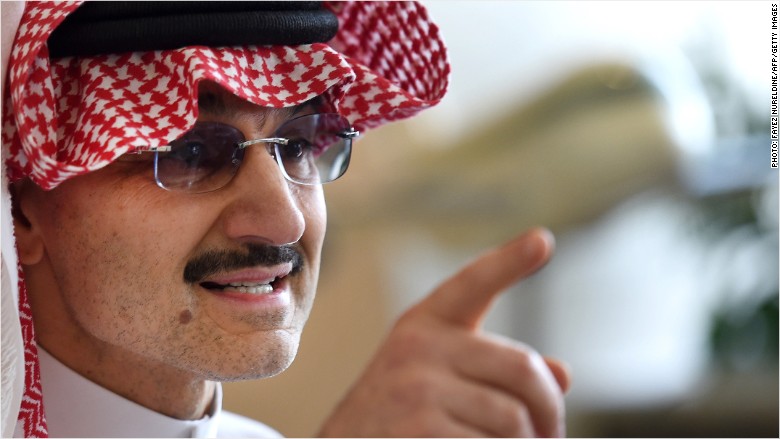
Who's the moron: Trump or a Saudi prince attacking Trump? Answer: Voters

Saudi prince insults Donald Trump. So a Saudi prince, not exactly a favourable figure in US politics for all the back dealing and inside politics of the Bush family, attacks Trump:

"You are a disgrace not only to the GOP [Republican Party] but to all America,"
"Withdraw from the US presidential race as you will never win."

Does he not realize that he is playing right into Donald Trump's plans? Is THIS a setup? Of course Donald Trump is going to hit back and look like a BIGGER hero to the people he is manipulating. Was this a ploy FOR Trump or FOR Clinton?

Prince Alwaleed cannot be that stupid.  I am sure he went to good schools, studied more than his napkin,  and  I have to think Prince Alwaleed tweeted to look like a defender of Islam, which appeals to his base, and yet also manipulated Americans TOWARDS Donald Trump.

So should you take his words at face value, or should you connect the dots to his major donation towards Clinton Foundation? 

I wrote this post stream of consciousness style, complete with typos,  and then considered I should be clear for those unfamiliar: a vote for Trump in the Republican primary is a vote for Hillary Clinton in the general election in the prince's estimation.  So by transitive properties, a vote for Trump is a vote for Prince Alwaleed. He is acting the foil. So if you don't want the prince to win, don't vote for either Clinton or Trump.

Monday, December 14, 2015

Freedom for all: Islamists should be allowed to leave for da'esh, only they agree to give up their passports and citizenship.


It's hypocritical for a free society to restrict people from joining a caliphate. Like allowing people to join christian missions or the peace corps, we do not make people stay away from all foreign participation - we certainly don't restrict people from going abroad for business.


So we should live up to the ideals of a free society and allow people to leave for the caliphate with one condition. If they choose to leave for Syria, their passports are invalid once they get there. They will give up their citizenship to follow their ideals but they will be free.  If they agree it's a one way trip, and understand they will be tracked as a foreign terror suspect.

If you have the freedom to kill yourself in a climbing accident or in a sky-diving accident, then why can't you die for your ideals?

Thursday, December 3, 2015

In denial about impact...


Obama has a real behavioral habit which is one reason why he's seen as a poor president by some corners of America that would otherwise react rationally to reasonable behaviour. It's not just that people hate him because he's a democrat or a black man. It's because he stakes a claim on opinion that is proven false which makes him seem stupid or in denial about the impact of those statements being wrong. It strips credibility from what he's trying to do.

Obama has a real disconnection from the reality and impact of speaking an opinion that is proved wrong very soon after uttering it.  When he claims that off shore drilling is safe when it's as dangerous as any offshore operations, it makes he seem out of touch.  Barack Obama reverses campaign promise and approves offshore drilling

This was one of the first times I noticed this habit. This is a bad habit and any tactician would tell you how devastating it is for confidence if you utter wishful thinking that falls over immediately. Thinking 3 moves ahead, you know it's unwise to start that way. So why do it again and again?


When he calls a serious terrorist organization amateur when he could be vaguer that makes him seem ill-informed or out of touch.  Spinning Obama’s reference to Islamic State as a ‘JV’ team

When he claims Americans are safe when a fraction of them will clearly die in terror violence that will get through the safest security system, then he is lying to the masses when they can see differently. Obama: U.S. safe against ISIS attack.


It doesn't matter he was proven wrong in hours, it might have been hours weeks or months it will eventually happen.

When he refuses to blame Islam in any way for the violence they commit and get away with he tarnishes the rights of non-Muslim Americans that don't want to live in fear of deceitful neighbors.  Obama Explains Why He Doesn't Use The Term 'Radical Islam' For Islamic State, Al Qaeda

He is wishing the statements to be true when there is little support for that opinion. That is what opponents seize on to discredit; some of the most facile and foolish work of an otherwise capable president.

He is tone-deaf to the outcome when he is proven wrong, that it shakes trust and confidence at a time when people need assurance the president is not in denial. That denial of impact is far worse than any pipe bomb or assault rifle.

Sunday, November 15, 2015

An atheist replacement for religion


If there is to be a long term replacement for Christianity, or any religion, in today's society then there must be a substitute that equals the same components that people find in organized religion.  A religion offers more tangible contributions than just dogma (from christianity etc.) that shouldn't be trivialized nor minimized in terms of the overall impact of any religion.

Any replacement for religion must satisfy all the same human needs; it must have three main components:

  1. It must have an organization with rules and corporate knowledge.
  2. It must have a way to appeal to people's spiritual needs.  
  3. It must give a sense of fellowship and community for membership.

With or without a belief centre, it must give the same benefits that humans crave and need.  Without which, all efforts are doomed to push people back to religion.

Monday, November 9, 2015

Hillary Clinton's Futurama analogy


I can't help it but whenever I think of Hillary Clinton, I think of Mom from Mom's Old-fashioned robot company...


It seems to me to foreshadow president Clinton's reign...


Friday, October 30, 2015

#CNBCMediaBias: Why would you ask a question of a presidential candidate you would be embarrassed to ask a president?


If the media claims to follow the same high standards they criticize candidates for, then why would they ask questions that would sully professional journalism?  These are the same people that explain they are different from bloggers and online media because they are "professional". #CNBC debate tactics was nothing more than an inquisition without a trial.  They sound like pedophile priests distancing themselves from pedophiles.

Here is a simple media test: if the question would embarrass a journalist when asked to the president of the United States, then why would you ask it to a candidate? Someday that person might be. So why skew an information exchange debate with your own spin? How can the public rely on the media if they sink to cheap ratings tactics like bloggers do?

Monday, October 26, 2015

#DonaldTrump: Insulting your way into the White House

If #DonaldTrump wins the presidency, then this will be the first time in history that someone used rhetoric - as opposed to policy and personality differences - as the main plank of his political platform. 

The problem with Donald Trump's execution is you can't insult people - candidates or population - and then count on their support. If you are an abrasive person (and I can tell you from personal experience about being less than normal behaviorally) then you have an absolute ceiling on the people that accept you in the first place.   The more you insult, the less you count on. There is a long time between now and November 2016.

This demonstrates Donald Trump doesn't think three moves ahead, or if he does his plan is so genius it's inscrutable. But I suspect the former.

The only way to win with this course is to bring down every other candidate to your level that you're the least offensive candidate.  Carson is super-low energy, Bush's brother failed us on 9/11. The rest are losers.

How any one can insult people continuously and then expect them to work with you at the end of it is another matter.

Friday, October 23, 2015

The Real #ClintonDoctrine: steal credit for success, distance and delegate failure


The media are so stupid when it comes to analysis that they really shouldn't claim there is any. They take things at face value, perhaps that they are struck gobless from the incessant camera glare, and that leads to them missing the bigger picture.  Or they don't want to ruin their favorites, and they skew the story or ignore the facts. But the professional journalist really really suck at thinking through evidence right in front of them.

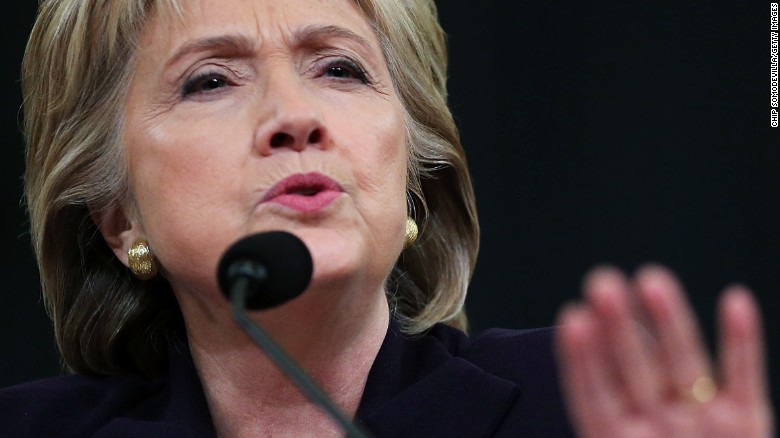
I watched some if not all of the #Clinton testimony, and this is what I gleaned.
Here is the real #ClintonDoctrine: spend more time worrying about the credit for success, making sure the French don't take all the credit while things are positive.  And then if things go pearshaped, make sure to avoid all accountability and responsibility for the same action you were taking credit for a moment ago.


When it came to Benghazi, when it was a success she spent her time thinking how to shape the media response to the success.  When Benghazi became a failure,  Clinton left the details to security experts. She was quick to distance herself from all security matters and leave it to experts.  When it came to Tunisia, she was quick to elaborate how she PERSONALLY phoned the president of Tunisia to send troops and rout protesters at the US embassy.  Yet when she was asked to explain how she could remember with such vivid detail the Tunisia event and yet have no recollection nor contact with Stevens in Benghazi, her answers deflected the question. Libya was her project but she had no hands on?  Tunisia was just an embassy but her role was critical?
  
In either case, what is clear is that Obama was the president for it all. He was the individual responsible for all action because they all work for him. So why was Hillary spending so much time on the least important part of diplomacy?

It was clear that Libya was a Clinton project that turned a dictatorship into a failed state. If her smart power model was so successful why does she want to avoid the failings now?


Do Americans want a president that will spend more time worrying about praise and recognition for all acts than just doing the job?  Is being president about personal glory?


Thursday, October 22, 2015

Welcome new voters; here is what you missed in the past 20 years

Welcome new voters, I understand  you are part of the reason the Liberals won this election.

If you are new to this country and you thought that Stephen Harper was a mean old White guy, that's understandable.  


It's easier for politicians to promise than deliver. No matter where you are from that's just a fact of life like death and taxes. 

While you were convinced that Liberals were going to deliver "real change" - preempting Obama's playbook with some fancy new buzzwords, that expectation and reality rarely meet.  How's that hopey-changey thing going for Obama? He's been able to deliver a fraction of what he promised; still Guantanamo remains...

In case you are just joining us, Stephen Harper replaced a Liberal to become the PM. And the Liberals he replaced were:


PM Paul Martin who promised to "fix healthcare for a generation".
Instead he off-loaded the debts onto the provinces and proclaimed a federal balanced budget.  Stephen Harper promised a 6% year over year increase to health transfers and delivered it.   The best quote about Liberals from the article above is (from 2005) :

If there's an interest group or constituency the Liberals haven't tried to appease in the last 10 days, it's only because they haven't thought of them yet.
Maybe that's the problem. The Liberals seem to think there isn't a political problem in the world that can't be solved by throwing money at it. Our money.
Sounds strangely like divisive politics doesn't it?

And don't forget the sponsorship scandal, where Liberals carried out manila envelopes full of taxpayer money for loyal servants of the party. We never got to the depths of how much was paid for "work" that wasn't verified. 


And before him was PM Jean Chretien.  He famously promised to scrap the GST as an election promise. How's that GST-scrappy thing working out for you?  He also promised to stop a helicopter contract worth C$5.8 billion for 50 helicopters.  In the end, the federal government paid around $500 million to get out of that contract.  And Chretien forced a no-compete Challenger contract that cost taxpayers for Liberal fundraisers.

That is how we got to Stephen Harper in the first place. 

So I guess my point is this; it's all great to get enthused about a real change in Ottawa and it's really nice to dream of a better tomorrow when you see great ideals like this:


But the recent history demonstrates Liberals exploit emotional responses to get the votes they need. They are very good at emotional content-less politics with meaningless platitudes like "tomorrow can always be better". Of course it can but that's one of three options and that outcome is uncertain.  And they will promise things they don't realize they can't deliver; and that's a very big problem because they end up as lies told to manipulate you in the first place.  But they don't care because it gets them elected. Delivering on what they promise is less realistic, it's easy to talk smack it's harder to make that change a reality.

And it's great to support positive change. But you may soon wake up to the reality that they are just as lock-step with corporations as the Conservatives were. And then you end up feeling something like this:


Let's hope the "new Liberals" live up to what they promised....